Australia-listed Donaco International Limited announced that it saw a slight drop in revenue during the quarter ended March 31st, despite stable visitation numbers across its properties.
Star Vegas generated some AU$6.2 million ($4 million) in net revenue, down from AU$7.17 million ($4.6 million) in the quarter ending in December, while property EBITDA also fell to AU$3.48 million ($2.24 million) from AU$4.22 million ($2.71 million) in 4Q24. Average daily visitation was also slightly down to 928 players.
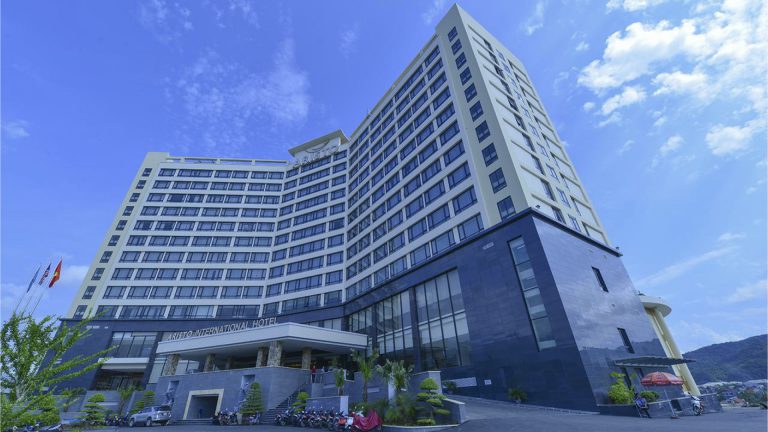
Looking to the Vietnam operations, Aristo International Hotel saw a slight increase in net revenue, to AU$3.75 million ($2.4 million), up from AU$3.73 million in 4Q24. Average daily visitation increased to 336 players, from 300 in the prior quarter, while property EBITDA totaled AU$2.31 million ($1.5 million), flat sequentially.
Speaking of the results, Donaco’s Non-Executive Chairman Porntat Amatavivadhana noted that “Despite continuing to report robust visitation numbers and applying stringent financial management, the operating environment proved challenging in the March quarter. Aristo continued to perform steadily during the quarter, reporting revenue growth and stable EBITDA. We also continued to see visitation numbers grow with higher levels of tourism in the region following reduced border restrictions and government tourism campaigns.”
However, the group is conscious of the potential threat from legal casinos in Thailand (if and when it materializes), noting that it will “evaluate its potential implications for our Star Vegas operations”.
Furthermore, the group has recommended shareholders to sign off on the sale of its shares to On Nut Road, a Hong Kong-licensed fund manager with more than $2 billion in assets under management, noting that “The Board has carefully considered the merits of the Scheme, and we believe On Nut Road Limited’s offer provides compelling value to Donaco shareholders, representing a 54.10 percent premium to the 90-day volume-weighted average share price”.
The move would place Donace purely under On Nut Road, representing 100 percent of the company’s shares after the buyout – for approximately AU$55.59 million ($35.2 million).
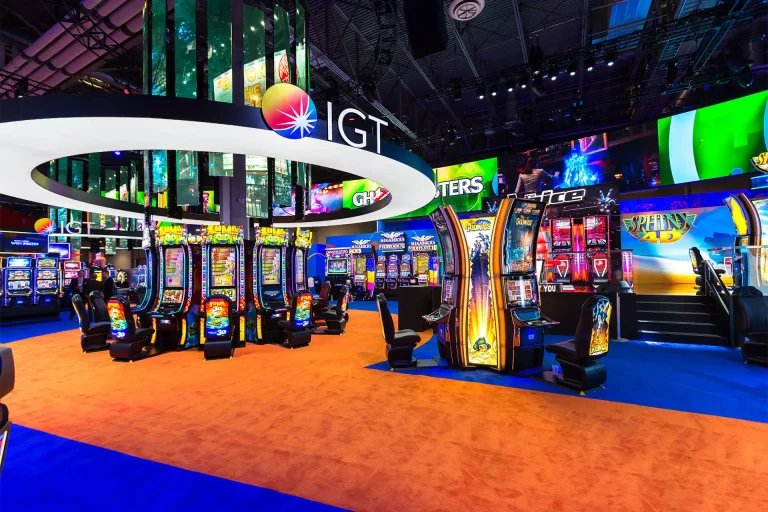
International Game Technology (IGT) has unveiled its plans to showcase its latest portfolio of solutions for the Asia-Pacific market at G2E Asia 2025, taking place at Cotai Expo – The Venetian Macao from May 7 to 9, at stand A801.
IGT will display a tailored suite of regionally attuned multi-level progressive link, standalone titles, and the IGT ADVANTAGE™ casino management system (“CMS”). IGT’s innovative G2E Asia 2025 portfolio is designed to deliver enhanced player entertainment, increase customer loyalty, drive performance, and meet the local market’s needs.
“Over the past 12 months, IGT has seen clear results in our realigned focus for Asia, and at G2E Asia 2025, we will expand upon this successful strategy with a product portfolio designed to deliver even more depth and entertainment to operators and players,” said Dallas Orchard, IGT Senior Vice President & Chief Operating Officer, Gaming APAC. “IGT’s global strength, paired with our localized focus, allows us to develop compelling offerings that provide variety across casino floors and will help increase our regional footprint for our electronic gaming machine and systems portfolios.”
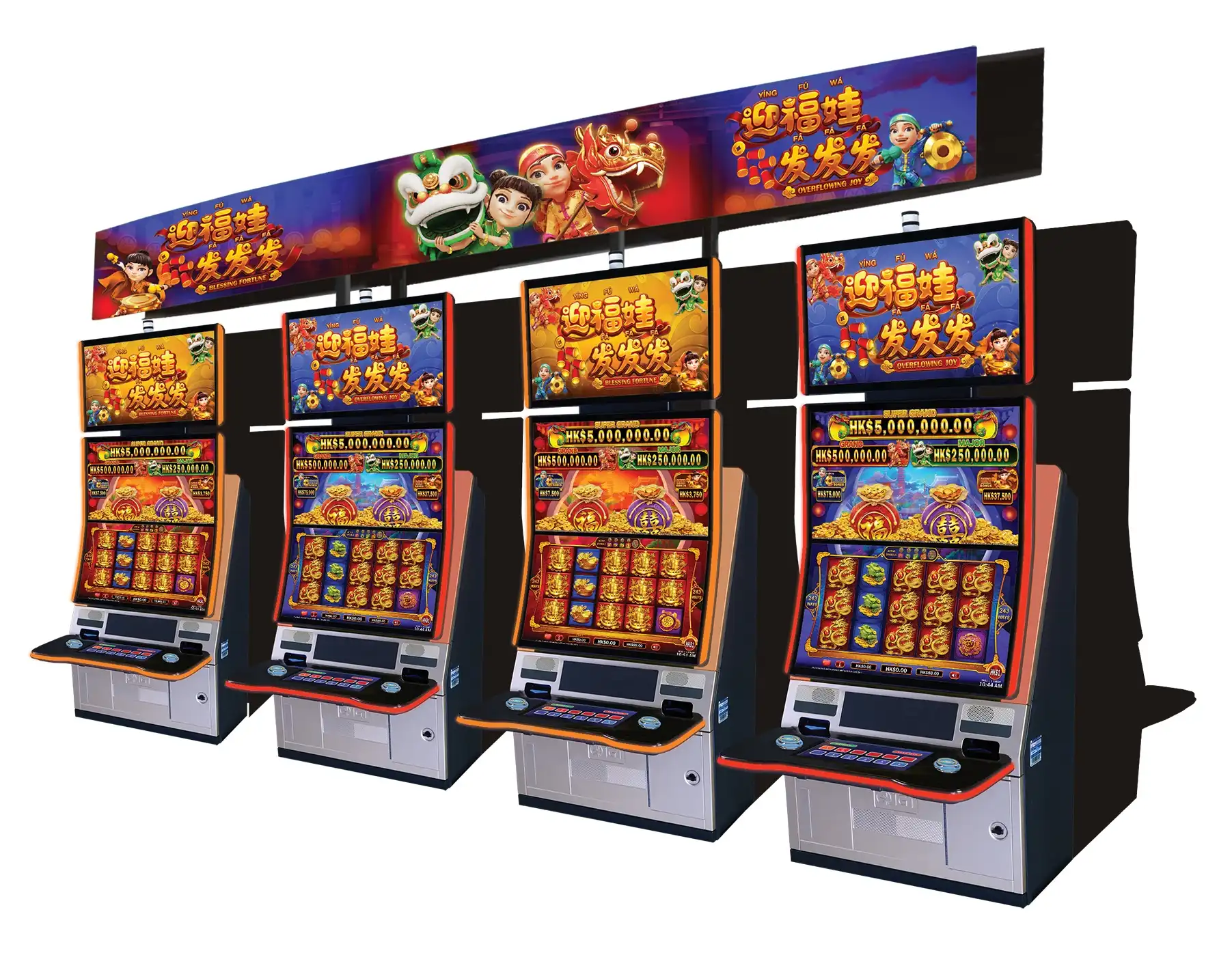
“With the recent appointment of new talent and partnerships, IGT remains focused on strengthening our commitment to the region by delivering a compelling product portfolio at G2E Asia,” said Charles Seo, IGT Senior Director of Commercial Strategy, Asia. “In addition to new multi-level progressive links, like the global sensation Tiger and Dragon and the locally developed Ying Fu Wa Fa Fa Fa, which takes our proven Ying Fu Wa to the next level, plus the revolutionary IGT ADVANTAGE CMS, we are set to write a new chapter in Asia by enabling our customers to diversify their gaming floors and drive performance.”
Key highlights for G2E Asia attendees to discover at IGT’s stand
Tiger and Dragon™ Link: An extension of IGT’s global hit Tiger and Dragon, this regionally attuned link powers up performance and gameplay with Cash on Reels™ and a lock and respin bonus with a unique betting structure that unlocks larger values and more win opportunities. Available on IGT’s PeakSlant49™, PeakCurve™49 and CrystalCurve® cabinets, Tiger and Dragon Link also offers the chance to multiply wins up to 10x and includes the popular multi-pot collection feature for an entertaining gameplay experience.
Ying Fu Wa™ Fa Fa Fa Link: This innovative link takes an IGT-proven performer to the next level. Building on classic and player-favorite Ying Fu Wa gameplay, this new evolution includes a revolutionary ‘888 Feature’ and the addition of a new progressive jackpot that accumulates rewards throughout gameplay. Available in two game titles, Blessing Fortune and Overflowing Joy, with free games for variety and entertainment, Ying Fu Wa Fa Fa Fa Link is available on IGT’s PeakSlant49™, PeakCurve™49, PeakSlant32™ and PeakDual27™ cabinets.
Ying Fu Wa Fa Fa Fa Link by IGT
Rising Rockets™ Link: This multi-level progressive link is currently boosting player entertainment and performance on casino floors across Asia. Available in two complementary game titles, Emperor and Empress, Rising Rockets Link offers three different lock and respin bonuses, scalable bonuses, multi-denomination options, and multiple jackpot opportunities during the bonus features. It is available on the PeakSlant49™, PeakCurve™49 and CrystalCurve® cabinets.
Money Gong™ Link: Packed with entertainment and a variety of gameplay experiences, the new Money Gong Link offers an innovative lock and respin bonus feature that includes three different gameplay modifiers, ‘Multiplier’, ‘Vortex Pays’ and ‘Prize Boost,’ for more chances to win. With a unique Money Gong bonus play-off for the chance to win the Money Gong jackpot, this new link is available on IGT’s PeakSlant49™ and PeakCurve™49 cabinets.
In addition to IGT’s demonstration of the exciting gaming portfolio covering more than 60 individual game titles, the IGT Systems team will demonstrate the differentiating features of IGT ADVANTAGE, including exciting bonusing options for Asia and IGT’s award-winning Cardless Connect® and Resort Wallet solutions. Offering amodular design that supports convenience-driving apps, IGT ADVANTAGE drives the player experience forward while helping optimize casino operations. Through IGT’s HTML-based M5 technology, operators can deliver personalized real-time promotions, bonuses, and more to the player via the cabinet’s service window.
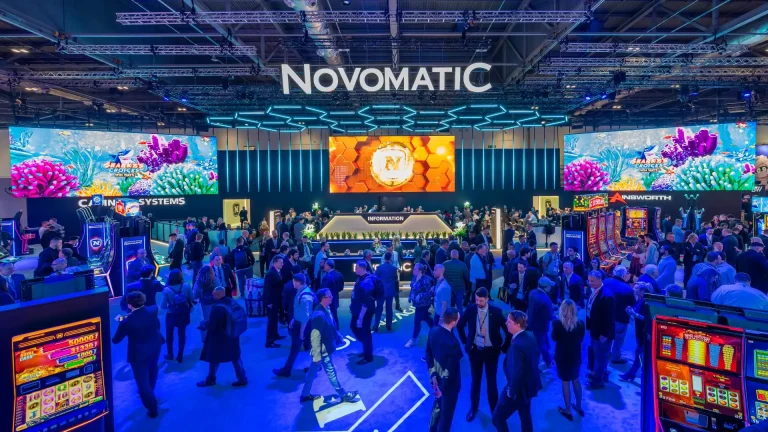
Gaming technology supplier NOVOMATIC has announced that it is acquiring Ainsworth, buying out the remaining stake in the company for some AU$336 million ($216 million).
The move is seen as a bolster to the group’s Australian operations, as the group previously held some 52.9 percent of Ainsworth’s shares – purchased in 2016 from founder Len Ainsworth.
Speaking of the move, Stefan Krenn, Member of the Executive Board of NOVOMATIC AG Group, noted that “The acquisition of Ainsworth is consistent with our international growth strategy and the expansion of our presence across the Asia-Pacific and the US region. As a long-term shareholder, we are familiar with the business and believe that integrating Ainsworth into our operations is in the best interest of this strategy.”
The deal is still subject to shareholder approval, scheduled for August.
As Thailand inches closer to legalizing casino gaming, industry experts are watching closely, and warning that the kingdom could quickly emerge as a major rival to established markets like Macau.
The nation was highlighted during a panel at the Macau Rui Cunha Foundation as part of the FRC/MBtv Debates series named “Higher Stakes: Macau’s Gaming Industry amid Rising Regional Competition”. The event brought together Ben Lee – Managing Partner of IGamiX; José Duarte – Economist and Macau Business Senior Analyst; Niall Murray – Chairman of Murray International (Macau); and Rosalind Wade – CEO of Winna Media.
The session was moderated by José Carlos Matias, Director of Macau Business and Macau News Agency, and included a large focus on the possibilities of a new Thailand gaming market.
“The Thai gaming market has huge potential,” Ben Lee reiterated. “Even if it’s not just about tapping into that potential, it’s a defensive move. Operators want a footprint there to protect market share from competitors.”
According to Lee, established giants like Las Vegas Sands and Melco Resorts are well positioned to seize opportunities in Thailand, given their experience navigating complex political environments and operating large-scale integrated resorts.
“Melco, for instance, has the biggest international footprint among Macau’s operators, from Cyprus to Manila and soon Sri Lanka. They’ve also shown a strong commitment to non-gaming amenities, which gives them an edge,” he added.
The stakes are enormous. Thailand’s tourism industry already boasts over 700,000 hotel rooms and generated about US$47 billion in tourism revenue last year — all without gaming. Lee suggested that if Thailand were to successfully introduce integrated resorts, it could replicate Singapore’s model of turbocharging tourism through casinos. “Without a doubt, they would very quickly become the number two gaming jurisdiction in the world,” Lee said. “And they would give Macau a real run for its money.”
A family affair
Thailand’s prime minister Paetongtarn Shinawatra
On the ground in Bangkok, movement is already underway. Lee noted that preliminary discussions suggest three licenses could be issued in outlying provinces such as Chonburi, Chiang Mai and Phuket, with possibly two more reserved for Bangkok itself.
For Niall Murray, the Thai ambitions are no sudden development, and have been a long time project of the powerful Shinawatra family, since the time of Thaksin Shinawatra.
“This has been in the works for years,” he said. “Back in 2008, one of Thailand’s prime ministers flew a famous casino architect around the country to scout locations. These big family conglomerates have been preparing ever since.”
Murray believes that the infrastructure and plans are so advanced that swift action would follow the passage of legislation. “The Eastern Economic Corridor, linking three major airports with high-speed rail, is already set up. Families behind those projects are the same ones positioning for integrated resorts,” he explained. “As soon as the law passes, you’ll see incredibly rapid movements.”
Some of the concepts under discussion include massive resort complexes featuring casinos alongside medical tourism hubs, racecourses, and entertainment districts. “The proposals from the old downtown shipyard area to a mega-strip of integrated resorts have been on the table for over a decade,” Murray noted.
But beyond the glamour, there’s a warning for Macau. “Thailand’s tourism is already incredibly diversified, unlike Macau, which still depends heavily on mainland Chinese visitors,” said Murray.
“Thailand had close to 36 million visitors post-pandemic, offering everything from jungle adventures in Chiang Mai to beach resorts and urban nightlife. They’ve got space, reasonable hotel rates, and extended stays — everything Macau struggles with.”
Economist José Duarte echoed these concerns. “Macau remains a small enclave catering mostly to day-trippers from the mainland. It still hasn’t diversified its tourism offering beyond gambling,” he said. “If Thailand legalizes casino gaming, it will not just be another Singapore-style competitor. It will be on a different, much bigger scale.”
Duarte pointed out that, while Singapore intentionally limits its casino development to control social impact, Thailand may not impose such strict restrictions. “Thailand could go all out — and that’s a much more serious challenge to Macau than we’ve seen before.”
Ben Lee further emphasized the geopolitical angle. “From the perspective of mainland Chinese authorities, Singapore was already considered risky enough that they warned citizens against gambling there. With Thailand, similar warnings have surfaced — urging Chinese tourists to avoid casinos altogether.”
Spinmatic, a leading B2B provider of premium HTML5 casino games, continues its debut in the Greek market following its recent certification and has strategically partnered with N1 Casino, one of Greece’s fastest-growing online casino platforms, to expand its regional presence.
Since their launch, N1 Casino has rapidly gained traction among Greek players due to its intuitive platform, exciting promotions and a stellar reputation for fast, secure payouts. With Spinmatic’s advanced, mobile-optimised games now added to its portfolio, the partnership is built for success.
Georgios Sideridis, Casino Manager at N1 Casino, expressed his enthusiasm about this new collaboration: “We are delighted to welcome Spinmatic to the Greek market through N1 Casino. Their portfolio brings a fresh perspective, and we are confident that they will offer an exciting experience to our customers. This collaboration is a step forward in expanding our portfolio selection and strengthening our overall offering.”
Norbert Mathies, Managing Director of Spinmatic, also shared his excitement: “Greece is a thrilling and growing market and we’re here to make some noise. Partnering with N1 Casino, a trusted, fully licensed operator, positions us ideally to introduce our premium slot games to a highly engaged audience.”
Spinmatic is bringing 12 of its top-performing games to N1 Casino, directly addressing Greek players’ preferences with titles like Egyptian Stone and Ed Jones and the Book of Seth, perfect for players with a taste for historical themes.
Moreover, Spinmatic’s portfolio also includes classics such as Sizzling Blaze Deluxe and Sizzling Blaze Jackpot Deluxe, both well-established favourites among casino players. The provider is also riding the emerging trend of Crash games with Meteoroid and its latest edition Meteoroid Deluxe, appealing strongly to younger players seeking fast-paced, instant-reward gameplay.
Pragmatic Play, the leading content supplier to the iGaming industry, has launched Gates of Olympus Super Scatter, a super special edition of the award-winning original slot, which introduces a new scatter symbol and 50,000x max win.
As in the hit original, multiplier symbols can strike with random values of between 2x and 500x on any spin in the base game or bonus game.
The bonus game triggers when four or more scatters land anywhere on the reels. During the feature, which begins with 15 free spins and can be retriggered, multipliers of up to 500x can randomly hit. When a multiplier lands on a winning spin, it’s added to a total multiplier which is applied to the win. Two bonus buy options are also available in select markets, with multipliers starting at 10x in Super Free Spins.
Following on from the legendary Gates of Olympus and supercharged Gates of Olympus 1000 slots, the latest game in the series amps up win potential with the all-new Super Scatter symbol. Landing one, two, three or four Super Scatters while triggering the bonus game awards a massive 100x, 500x, 5,000x or 50,000x cash prize respectively.
Gates of Olympus Super Scatter joins Bandit Megaways™and Big Bass Bonanza 1000as the most recent additions to Pragmatic Play’s premium slots portfolio.
Irina Cornides, Chief Operating Officer at Pragmatic Play, said: “Gates of Olympus Super Scatter is an epic addition to one of Pragmatic Play’s most iconic and popular slots series, introducing a new scatter symbol alongside wins of up to 50,000x.”
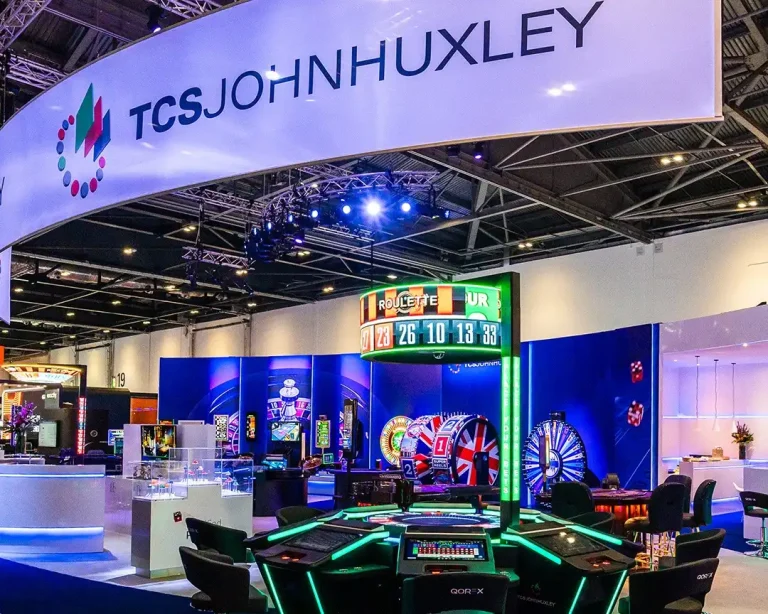
TCSJOHNHUXLEY, a global leader in live gaming solutions, is set to unveil a powerful lineup of products at G2E Asia 2025, designed to elevate the gaming experience.
Building on a legacy of innovation, TCSJOHNHUXLEY will showcase its commitment to delivering state-of-the-art technology and unparalleled quality to the Asian gaming market.
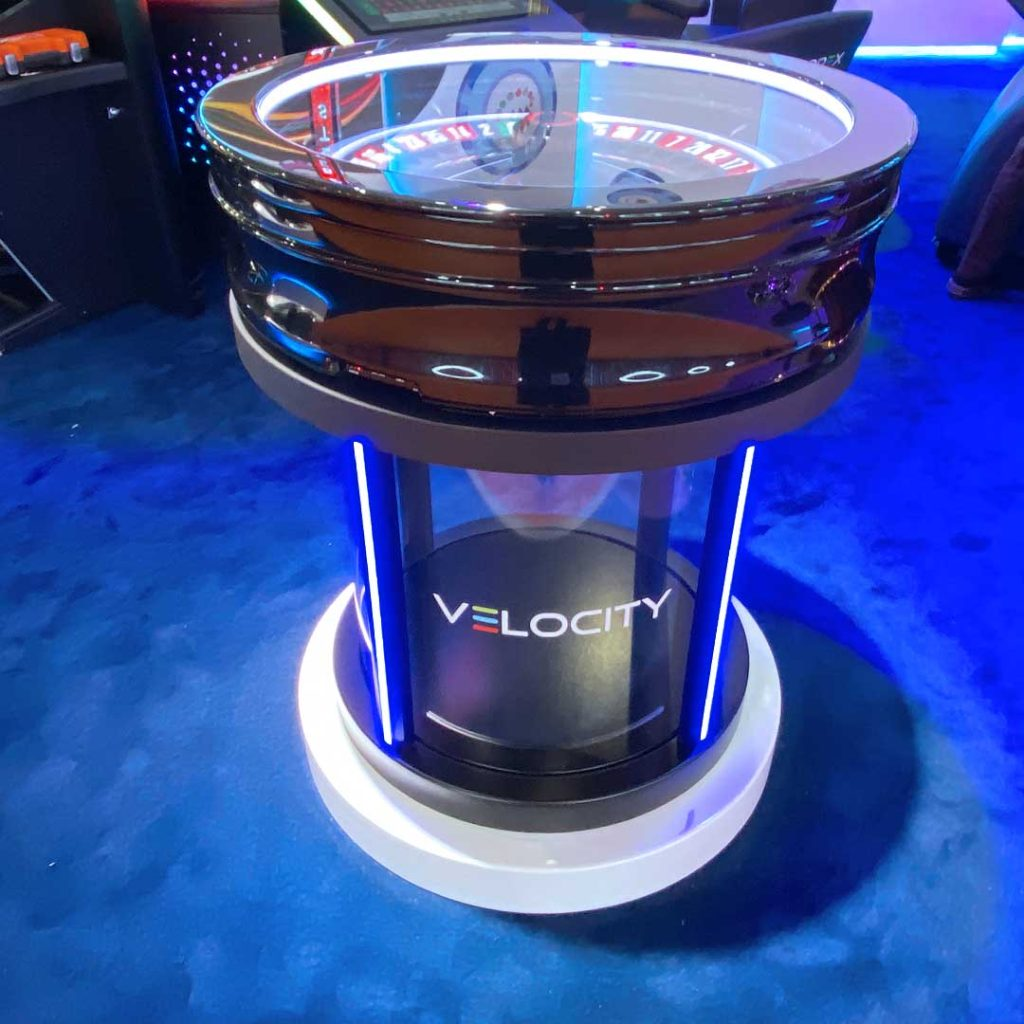
G2E Asia attendees will experience the revolutionary Velocity Auto Wheel featuring cutting-edge automation and compatibility with the Wheelmate console, setting a new industry standard for speed and efficiency. This automated wheel empowers operators to offer more games per hour than ever before, dramatically increasing table turnover and revenue.
Its innovative brushless DC motors and gearless design ensure continuous, reliable operation, eliminating the need for bulky, noisy air compressors. The compact and efficient design seamlessly integrates into any live Roulette table or can be showcased on a standalone podium.
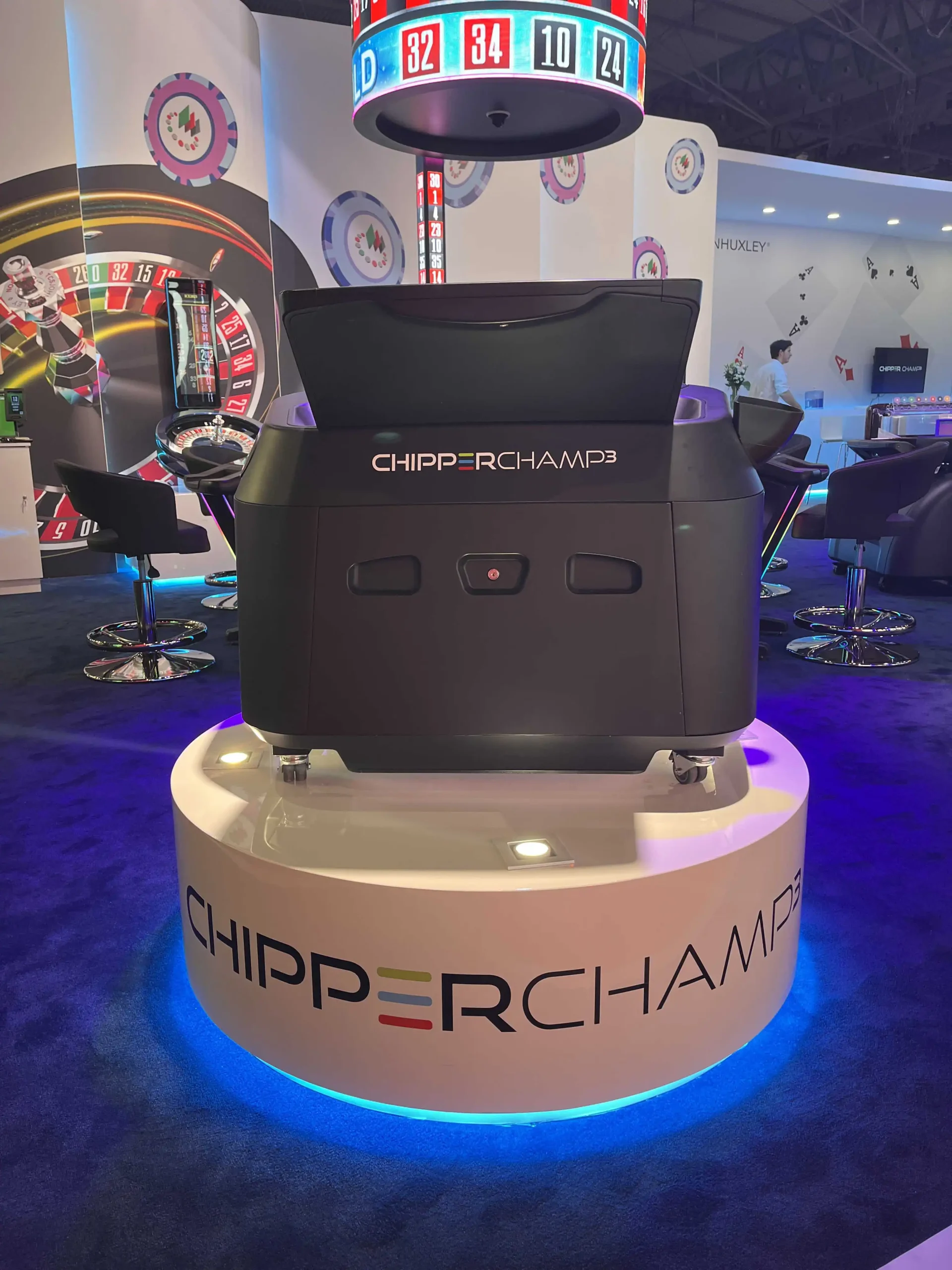
Also taking centre stage is the Chipper Champ 3, the next generation of chip sorting efficiency. Get ready to experience increased speed, accuracy, and a revolutionary new clay chip sorting feature. This advanced capability will significantly reduce handling time, streamlining your entire table operation.
TCSJOHNHUXLEY will also highlight its advanced display solutions, including the versatile Ora Winning Number Displays, known for their clarity, customisation, and reliability in presenting vital game information. Bringing a new dimension to Blackjack, visitors can experience the new Ora Blackjack Vue Display Controller that seamlessly integrates with the Ora Luxe Winning Number Display, employing camera technology for automatic card recognition. This provides players with valuable real-time data such as dealer hand history, live dealer odds, historical stats, and the last four dealer Blackjacks. The popular Blaze Gaming tables, particularly the Sic Bo variant, will also be featured, showcasing how dynamic LED surface technology can enhance the excitement of traditional games.
In addition to these innovations, TCSJOHNHUXLEY will showcase its world-class core product range, emphasising the company’s renowned manufacturing expertise. From Roulette wheels and Gaming Tables to Dice Shakers, visitors can witness the superior craftsmanship and quality that define TCSJOHNHUXLEY products.
“G2E Asia 2025 provides an exceptional platform for us to connect with our valued customers and partners in the region,” stated Rebecca Kingswell, Global Head of Operations and Managing Director APAC, TCSJOHNHUXLEY. “We are excited to showcase our latest innovations, particularly Velocity and Chipper Champ 3, which reflect our ongoing commitment to delivering cutting-edge solutions that enhance the gaming experience. These are just a taste of the innovative solutions TCSJOHNHUXLEY will be showcasing at G2E Asia 2025. We’re committed to providing you with the tools and technologies to drive growth and enhance player satisfaction.”
To see why TCSJOHNHUXLEY is the gold standard when it comes to live gaming solutions, be sure to visit Booth no. B1338, May 7-9 at Venetian Macao where the TCSJOHNHUXLEY Asia team are looking forward to welcoming you.
TaDa Gaming, the award-winning content provider, is expanding its social gaming reach with the US launch of its free-to-play platform, Freeslotmatch, bringing a fast-growing library of immersive slots and multiplayer formats to a brand-new audience.
Following its debut in Brazil, the platform now offers US-based players the opportunity to explore TaDa Gaming’s popular titles in a fully social, risk-free environment. In addition to the US launch, the company is currently preparing for further rollouts in other countries, with additional markets set to go live later this month.
Players can enjoy fan favourite titles such as Fortune Gems, TriLuck™,DARKREEL™ and the SurgeReel™ series, with crash, table and fishing-shooting games set to follow.
Designed to mirror the thrill of real gaming without any monetary commitment, the platformfeatures a range of tournament features including single-round wins, cumulative wins, limited spins, and more, all powered by a straightforward, intuitive interface that supports fair and accessible gameplay.
Registration is free and open via email, Google, Facebook, Twitter, or Telegram, and the platform is available in English, Spanish and Portuguese. Rewards are delivered directly to the registered email account, allowing players to compete, track their progress and enjoy a seamless social gaming experience.
Andy Huang, CEO at TaDa Gaming, said: “After a successful launch in Brazil, we are excited to bring freeslotmatch.com to the US market. The platform hosts over 160 games and combines our most engaging titles with interactive features and tournaments, giving players a space to enjoy and explore our content without financial risk.”
Macau Chief Executive Sam Hou Fai stated on Sunday that the government plans to push four major projects over the next 8 to 10 years to drive economic diversification and reduce Macau’s reliance on the gaming industry.
The four major projects include the creation of a MOP12 billion ($1.5 billion) Integrated Cultural and Tourism Zone, which is planned to develop into a landmark cultural hub for the Asia-Pacific region and beyond. Public tenders are expected to open in the second half of this year, with construction anticipated to take two to three years.
Total summation of the costs of the various endeavors, including the above, equates to around $4.75 billion.
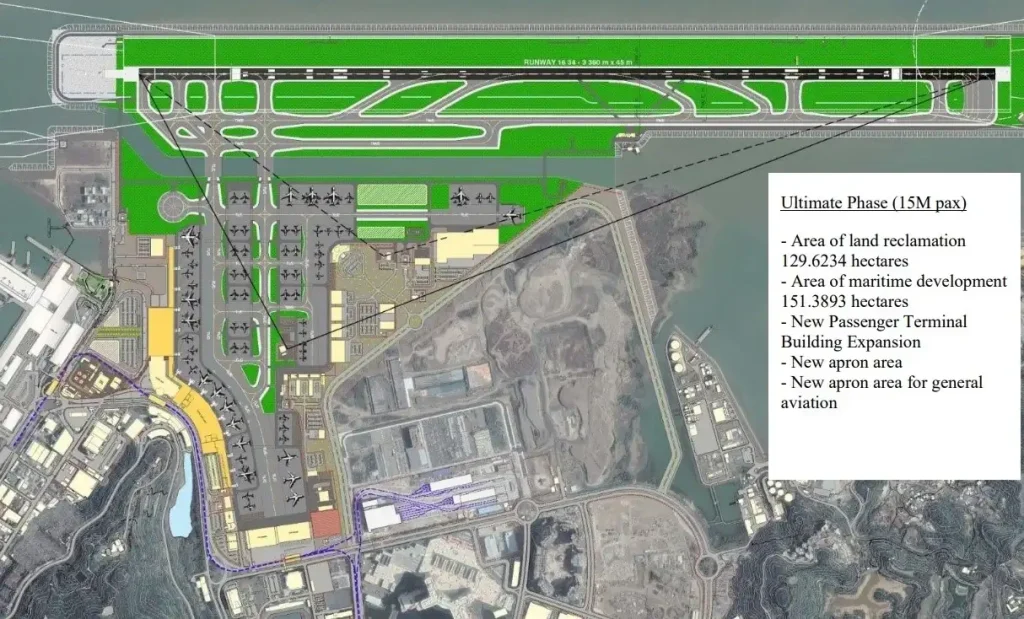
The Macau International Airport Expansion Project, with a budget of approximately MOP6 billion ($750 million), has already been approved by the central government and is in progress. This expansion project involves land reclamation to transform the airport into a major international aviation hub on the western bank of the Pearl River.
Macau Airport Expansion
In addition, a MOP20 billion ($2.5 billion) investment will be made in a new university town in Hengqin. Macau will also build a Technology Research and Development Industrial Park, aiming to establish an internationally attractive R&D environment with comprehensive supporting facilities, designed to draw major domestic and international companies to set up research headquarters and bases.
The statement was made during the “Opportunity Macau” media briefing with 30 media outlets across the country. Sam noted that gaming taxes represented about 80 percent of Macau’s total tax revenue last year, demonstrating the government’s excessive dependence on the gaming sector. By comparison, taxes from all other sectors contributed merely 20 percent, highlighting a significant structural imbalance.
He emphasized that Macau’s economy has been overly concentrated on a single industry for too long and stressed the urgent need to address this issue by gradually promoting moderate economic diversification—a central goal outlined in his first Policy Address.
Sam Hou Fai reported that Macau’s GDP exceeded MOP400 billion ($50 billion) in 2024, recovering to more than 80 percent of its 2019 level. However, he noted that the city’s economic structure remains fundamentally different from that of a typical economy. He pointed out that in 2000, gaming taxes constituted less than 60 percent of Macau’s tax revenue, but following the sector’s liberalization, this figure climbed dramatically to approximately 80 percent by 2024.
Sam emphasized the critical importance of reducing government dependence on gaming taxes moving forward.
He also highlighted the necessity of enhancing governance, improving the business environment, advancing Hengqin’s development, and strengthening external partnerships, aligning with President Xi Jinping’s directive to pursue moderate economic diversification.
Recent data shows that Macau’s government collected MOP22.2 billion ($2.79 billion) in gaming tax revenue during the first quarter of 2025, accounting for 88.1 percent of Macau’s total tax revenue of MOP25.2 billion ($3.15 billion) for the period.
Rickard Vikström, CEO and founder of Internet Vikings, a licensed in-state hosting provider for U.S. iGaming and online sports betting, has been named European CEO of the Year in the hosting industry.
The award recognizes Rickard Vikström’s work in expanding Internet Vikings’ presence from Europe into the U.S., where the company has become the fastest-growing hosting provider for the iGaming and sports betting industry. Internet Vikings continues to see strong year-on-year growth, becoming the go-to hosting partner for European operators expanding into the U.S. market.
Vikström has led Internet Vikings through several key initiatives, including early market entry in emerging U.S. states, the introduction of flexible hosting models such as Pay-as-You-Go Bursting, and a focus on operational transparency and customer responsiveness. He also helped secure VMware Premier Partner status for the company.
Internally, Vikström is known for his direct and accessible leadership approach, maintaining regular contact with clients and actively participating in customer support improvements.
This award highlights his ability to scale a European company internationally while maintaining close attention to service and technical reliability.