Home Blog Page 31

Emperor Entertainment loss narrows 90% after Macau gaming exit

0

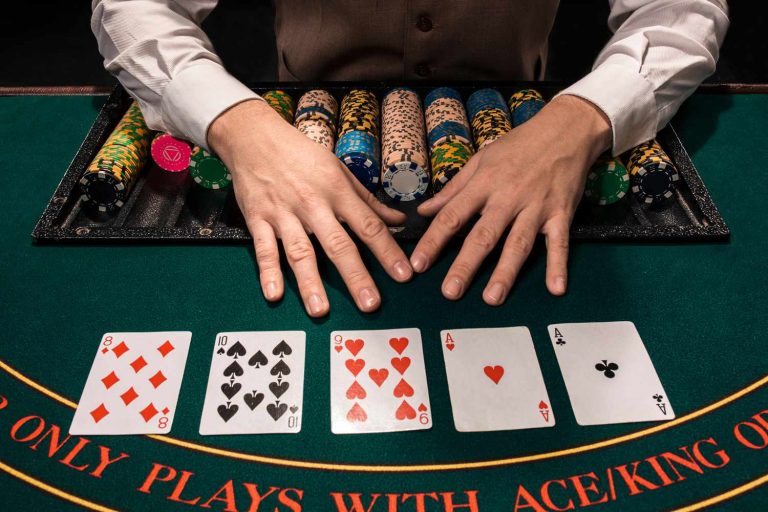
Emperor Entertainment Hotel narrowed its net loss by 90 percent for the year ended March 31st, 2026, after exiting its casino business in Macau. 

The Hong Kong-listed hospitality group posted a net loss of HK$24.8 million ($3.2 million), down from HK$248.1 million ($31.8 million) a year earlier.

The gaming area at Grand Emperor Hotel ceased operations on October 31st, 2025, after the company and SJM Resorts, S.A. agreed to terminate their service agreement early. No gaming revenue was recognized after that date, and gaming revenue for the full year fell to HK$179.4 million ($23 million), down from HK$505.6 million ($64.8 million).

Total revenue fell to HK$512.2 million ($65.7 million) for the year, compared with HK$837.0 million ($107.3 million) in the prior year. Revenue from hotels and leasing apartments held broadly steady at HK$332.8 million ($42.7 million), against HK$331.4 million ($42.5 million) previously, and accounted for 65.0 percent of total revenue, up from 39.6 percent a year earlier.

The narrower net loss was driven largely by a smaller fair value loss on investment properties, which fell to HK$106.2 million ($13.6 million) from HK$371.7 million ($47.7 million) in the prior year. Basic loss per share was HK$0.01, compared with HK$0.16 a year earlier.

Following the gaming closure, the group’s headcount fell to 349 employees as of March 31st, 2026, from 659 a year earlier, with total staff costs dropping to HK$212.4 million ($27.2 million) from HK$325.1 million ($41.7 million).

The group’s remaining portfolio includes the Emperor Hotel and three leasing apartment blocks under “The Unit” in Hong Kong, along with Grand Emperor Hotel and Inn Hotel in Macau. 

The board did not recommend a final dividend for the year. The company said it is exploring alternative entertainment and amusement offerings at Grand Emperor Hotel to broaden its revenue base following the exit from gaming.

Visualize Group expands gaming compliance portfolio with eCOGRA acquisition

The Visualize Group, a private investment firm specializing in mission-critical services businesses, has agreed to acquire eCOGRA, a leading provider of testing, certification, and compliance services for the global online gaming sector.

The acquisition follows Visualize’s recent purchase of BMM Testlabs, further strengthening its position in the gaming testing and certification market.

Founded in 2003 and headquartered in London, eCOGRA serves gaming software suppliers, operators, and regulators across more than 50 jurisdictions worldwide. The company is widely recognized for its independent certification standards that promote player protection, game fairness, and regulatory compliance.

Together, eCOGRA and BMM will provide complementary expertise across digital and land-based gaming, enabling Visualize to expand service capacity, broaden licensing coverage, enhance turnaround times, and deliver greater value to customers while maintaining each company’s operational independence and accreditation standards.

As part of the transaction, Visualize plans to extend its employee ownership program to eCOGRA’s workforce, aligning employees with the company’s long-term growth strategy.

Will Shuckburgh, CEO of eCOGRA, said, “For more than two decades, eCOGRA’s mission has been to ensure that players can trust the games they play and that operators can meet the highest standards of compliance. As regulated gaming expands into new markets around the world, the demand for fast, rigorous, and reliable certification has never been greater. Partnering with Visualize gives us the resources to serve our customers better — to invest in our people, our technology, and our capacity — while continuing to operate with the independence and integrity that our accreditation partners and customers expect.”

C. C. Melvin Ike, Founder and Managing Partner of Visualize, added, “As high-conviction thematic investors, we back exceptional businesses and management teams providing mission-critical services in growing markets, and we build deep expertise in the sectors to which we commit. Building on our experience in regulated gaming, the independent testing and certification that both eCOGRA and BMM provide is fundamental to protecting players and sustaining the trust of regulators, and the two businesses bring distinct capabilities across online and land-based gaming. With eCOGRA, our intention is straightforward: to build eCOGRA into a generational business that can deliver faster, more responsive, and more innovative service to a fast-growing market that needs more high-quality service. We’re thrilled to partner with Will and the entire eCOGRA team.”

“We invested in eCOGRA because it was a high-quality business operating in an attractive market, with a well-earned reputation that had been built over many years,” shared David Cowan, Managing Partner at Hanover Investors. “Since then, the team has continued to strengthen the business, expanding its global reach, investing in its capabilities and reinforcing its position as a trusted partner to regulators and operators around the world. We are proud of what has been achieved during our ownership and grateful for the commitment and hard work of Will and the wider eCOGRA team. We believe Visualize is the right partner to support the next phase of growth and are excited to see eCOGRA continue to develop in the years ahead.”

Financial terms of the transaction were not disclosed, and the transaction is subject to customary regulatory approvals and clearances.

Weil, Gotshal & Manges LLP and Greenberg Traurig acted as legal advisors for Visualize. Macquarie Capital acted as financial advisor for Hanover and eCOGRA. Willkie Farr & Gallagher LLP acted as legal advisor for Hanover and eCOGRA.

1xCare launches to advance player protection and responsible gambling

1xCare has announced its official launch as a dedicated initiative focused on player protection, responsible gambling, and harm prevention across the global gambling ecosystem.

1xCare has been established by the owner of the global brand (trademark) 1xBet to consolidate efforts in research, education, technology, and player well-being under one unified framework. Its mission is to advance player protection and responsible gambling through evidence-based research, education, innovative technologies, and collaborative partnerships.

Simon Westbury, 1xBet

Its vision is to become a recognised hub for responsible gambling excellence across the global gambling ecosystem.

Simon Westbury, Chairperson

Four Core Pillars

1xCare’s work is structured around four pillars:

  • Research Hub — Supporting evidence-based studies on gambling behaviour, addiction risks, and emerging technologies, with transparent public reporting.
  • EduCare — Promoting responsible gambling education, awareness programmes, and ethical standards across operators, sports, and communities.
  • TechShield — Advancing responsible gambling technologies, including tools for early risk detection and safer player experiences.
  • Support & Well-Being — Improving access to counselling, helplines, and holistic support services through grants and partnerships with qualified organisations.

1xCare operates with dedicated governance structures, including an Advisory Committee, and is committed to publishing regular impact updates. The funded initiatives aim to foster collaboration with regulators, researchers, and civil society.

“1xCare is built to contribute, not to compete,” added Westbury. “We look forward to working alongside existing experts and organisations that share the goal of better protecting players and building greater trust in the industry.”

Australia prioritizes gambling advertising reforms in 2026–27 compliance agenda

The Australian Communications and Media Authority (ACMA) has identified the implementation of the country’s new gambling advertising reforms as one of its key compliance and enforcement priorities for the 2026–27 financial year.

The regulator outlined the initiative as part of its broader compliance program, which also covers telecommunications safeguards, mobile phone equipment standards and emergency call services. “We will prioritize the implementation of law reforms (following enactment by the Parliament) that are proposed to introduce new restrictions on gambling advertising,” ACMA said in its compliance priorities.

The regulator noted that the proposed reforms would ban gambling advertisements during live sporting events within designated hours while introducing tighter restrictions across television, radio and online platforms.

ACMA said it will provide guidance to broadcasters, advertisers and online content providers to support compliance with the new framework, while also taking enforcement action where breaches are identified. “We will also undertake investigations and enforcement action where advertisers, broadcasters or online content providers fail to comply with the new requirements,” the regulator said.

Beyond advertising reforms, ACMA said it will continue efforts to reduce the social, financial and health harms associated with gambling. The regulator also plans to strengthen cooperation with government agencies and industry stakeholders to combat fraudulent “scambling” services targeting consumers, crack down on influencers promoting illegal offshore gambling operators, disrupt unlawful gambling services and improve compliance with Australia’s national self-exclusion register, BetStop.

The compliance priorities follow the Australian government’s gambling advertising reforms announced by Prime Minister Anthony Albanese in April, described as the country’s most significant overhaul of gambling advertising rules. The measures are intended to reduce gambling-related harm and limit public exposure to gambling advertising, particularly among children.

Under the reforms, from 2027 television gambling advertisements will be limited to three advertisements per hour between 6:00 am and 8:30 pm. Gambling advertisements will also be prohibited during live sports broadcasts within those hours. The government stopped short of introducing a complete ban on online gambling advertising, arguing that removing advertising by licensed operators could drive consumers towards unregulated offshore gambling websites operating outside Australia’s regulatory framework.

The reforms have attracted criticism from public health advocates and anti-gambling campaigners, who continue to call for a phased prohibition on all gambling advertising. In late 2024, the Australian Greens introduced legislation seeking a complete ban, although the proposal was rejected by the Senate. The party has indicated it intends to revisit the issue.

Separately, Australia’s gambling sector continues to adapt to updated anti-money laundering and counter-terrorism financing (AML/CTF) requirements that came into effect in March.

Thailand moves ahead with lottery-linked pension scheme

Thailand is pushing forward with an unconventional retirement savings program that attaches prize draws to pension contributions, in what the World Bank has described as a potential model for other developing nations.

The retirement lottery, backed by the Thai government in late 2024 and legally endorsed in November 2025, is linked to the country’s National Savings Fund (NSF), a voluntary scheme introduced in 2011 to extend pension coverage to informal and self-employed workers. Implementation has been delayed while legislators iron out the technical details, but the structure of the scheme is established.

Under the program, participants purchase digital tickets capped at THB3,000 ($92) per month. The full value of each ticket purchase is deposited directly into the buyer’s individual NSF pension account rather than being spent, with funds locked until the age of 60. Every ticket also enters the buyer into a weekly prize draw, with a top prize of THB1,000,000 ($31,000) and 10,000 smaller awards of THB1,000 ($31) each. The scheme targets Thai savers aged 15 and over.

The policy is designed to address persistently low uptake of the NSF, which, despite government matching contributions and tax benefits, had enrolled only 13.7 percent of informal workers by April 2026, according to NSF data. Thailand’s National Statistics Office puts the informal workforce at 20.9 million people, representing 52.4 percent of the country’s total labor force as of 2025.

Thailand’s lottery culture provides the behavioral foundation for the scheme. A 2019 survey found that one in four Thais had purchased lottery tickets, with total annual lottery spending estimated at THB250 billion ($7.7 billion). A 2023 report by the Center for Gambling Studies Thailand identified approximately 24 million lottery buyers annually, with participation highest among the 50–59 age group at 25 percent. State lottery sales generated around THB3.4 trillion ($104.6 billion) for the Thai government between 2013 and 2022, according to research by the Thailand Development Research Institute.

Unlike Thailand’s traditional six-digit government lottery, the retirement lottery is structured so that even non-winners benefit, since their ticket spend converts directly to pension savings. Proponents argue this transforms what has historically been characterized as a social harm into a mechanism for individual financial security.

The World Bank praised the scheme in 2025 as an innovative approach to boosting pension participation and has flagged it as a potential template for low- and middle-income countries.

Critics, however, question whether the program will draw fresh money into the pension system or simply layer on top of existing lottery spending, and raise ethical concerns about using prize incentives to drive financial planning behavior among populations that may not fully understand the underlying savings mechanics.

The Bank of Thailand’s 2024 financial literacy survey found that only around 14 percent of Thais meet their retirement savings targets, underscoring the scale of the challenge the program is attempting to address.

Timeless Blaugrana: How FC Barcelona kit became symbol of football – look from 1xBet

Some kits become iconic for a single season. Others have long been an integral part of football culture. They’re instantly recognizable even without a club crest, player names, or jersey numbers. The FC Barcelona kit is one of those.

All it takes is the blue and garnet colors and a few stripes, and the Blaugranas are instantly recognizable. Over 127 years, the Barça jersey has weathered changing eras, football styles, and design trends, but it has retained what matters most: its own identity. 

That is precisely why the FC Barcelona jersey has long been more than just a kit. It is the club’s visual language, recognizable anywhere in the world.

How blue and garnet began

On November 29, 1899, Joan Gamper founded Futbol Club Barcelona. The club’s first kit looked unusual even by the standards of the time: the shirt was divided into two halves – blue and garnet. The sleeves featured the colors in reverse order, and the shorts were white. 

No stripes, no intricate designs, and no attempts to stand out. Yet it was precisely this minimalism that later became one of the most recognizable football looks in the sport’s history.

The origins of the blue and garnet colors remain a subject of debate to this day. Some link the colors to the Swiss club Basel, for which Gamper played, while others associate them with Arthur Witti and the kit of an English school rugby team. There is no definitive answer, but one fact is more significant: the combination of blue and garnet has stood the test of time. 

How the stripes became Barça’s symbol

In 1910, FC Barcelona adopted vertical blue and garnet strips, a design that would later become a club classic.

It was then that the kit acquired the very rhythm that is associated with Barça today. The stripes made the jersey look more aggressive, dynamic, and noticeable on the pitch. At the same time, the underlying idea remained the same: the kit had to be recognizable at a glance.

Over time, the details changed. The stripes became narrower or wider, new collars appeared, and the cut evolved. In 1913, the shorts were made black, and from 1920 onward, they were blue, and this element became a permanent part of the club’s image. 

But the most important thing remained unchanged: the blue and garnet colors have always been at the heart of FC Barcelona’s visual identity.

Experiments that didn’t destroy the club’s DNA

The history of the Barça jersey is a story of a constant balance between tradition and modernity. 

With the advent of color television, colors became more vibrant, so the kit would look just as striking on screen as it did in the stadium. In the ’80s and ’90s, football entered an era of synthetic fabrics, intricate graphics, and new technologies. Later came textures, patterns, and bold design choices.

At times, FC Barcelona has gone to extreme measures.

In the 2015/16 season, the club debuted a kit with horizontal stripes for the first time. For a team that had been associated with vertical stripes for decades, this felt almost like a revolution in football. And in 2019/20, Barça unveiled a checkered kit inspired by the geometry of Barcelona’s Eixample district.

The fans’ reaction was enthusiastic both times. And this only confirmed just how much more the kit means to FC Barcelona than just a seasonal design. 

Why Barça always returns to its roots

The bolder the experiments, the more essential the club’s connection to its past becomes.

The 125th-anniversary kit for FC Barcelona was a perfect example of this approach. Instead of trying to reinvent blue and garnet colors, the designers went back to the roots – the aesthetic of the first 1899 jersey, deeper shades, and the historic color scheme.

The result isn’t just a retro kit, but a reminder that Barça possesses a rare quality in modern sports: continuity. The club evolves with the times, yet never loses its visual identity.

That’s precisely why even those who’ve never seen a specific season or squad recognize the FC Barcelona kit.

More than just a kit

For FC Barcelona, the blue and garnet colors have long ceased to be merely a football kit. 

They are a symbol of the club’s culture, character, and commitment to its identity. Each new generation of fans sees their own Barça in these colors, but the kit’s very essence remains unchanged: a blend of tradition and progress.

In the world of football, where designs change almost every season, FC Barcelona has managed to do what matters most: make the kit part of its own legend.

FC Barcelona and 1xBet: partnership built on recognition

The FC Barcelona kit is a prime example of how a strong identity endures for decades. The Blaugranas are instantly recognizable anywhere in the world without needing any explanation, and this kind of recognition is now one of the key assets of any global brand.

The partnership between FC Barcelona and 1xBet is built on this same philosophy: a strong identity is forged over the years. For decades, Barça has remained one of the most recognizable clubs in the world, maintaining its own style regardless of the era. 1xBet is also consistently building a global presence in the industry, working with an international audience and world-class sports projects.

In modern sports, visual identity has long been an integral part of a brand’s broader ecosystem, where consistency, audience trust, and the ability to maintain a distinct character over time are paramount. That is why the partnership between FC Barcelona and 1xBet appears to be a logical extension of their shared philosophy of combining tradition, scale, and continuous development. And for those who work professionally with football and sports audiences, the 1xPartners affiliate program remains an integral part of this ecosystem.

The history of the FC Barcelona kit shows that a true identity can withstand any change. Generations, designs, and the game itself may change, but the Blaugranas are still instantly recognizable. That’s the kind of recognition on which strong and long-term partnerships are built.

Habanero transports players to a magical kingdom in Happy Hatchlings

Blending fantasy with high-octane features, Habanero’s newest release, Happy Hatchlings, invites players to a magical dragon kingdom where transforming symbols and multipliers drive winning potential.

At the heart of the game is the Ice Mother Wild. When triggered, every matching egg symbol on the screen converts into a powerful dragon symbol simultaneously. The screen-wide effect can dramatically increase the reward potential from a single spin, giving the base game a sense of anticipation that builds from the very first spin.

Ice Mother spins can also apply random multipliers of 2x, 3x, 5x, 8x or 10x to all wins, adding further weight to the base game and contributing to a maximum win potential of 5,446x the total bet.

Landing three or more scatter symbols triggers the Free Games feature, where the Ice Mother Wild can appear on any reel, increasing the potential for larger wins as transformed symbols and multipliers come together.

This latest release follows a strong run of Habanero slot launches, including Nuwa Deluxe and Steampunk Plinko, as the provider continues to deliver highly engaging titles built to perform across markets worldwide.

Toni Karapetrov, Head of Corporate Communications at Habanero, commented: “Happy Hatchlings is built around a high-impact mechanic designed to keep players engaged from the first spin, bringing together a charming fantasy theme with features that are easy to understand but capable of delivering serious win potential. At the centre of the game is the Ice Mother Wild, which gives the title its identity by transforming symbols and applying multipliers in a way that keeps the action moving. With its recognisable theme and powerful core mechanic, this is a release we expect to resonate strongly with players and operators alike.”

QTech Games strengthens premium portfolio with 18Peaches partnership

QTech Games continues to push the bar and maintain momentum in its premium pipeline through its latest deal with rising-star supplier 18Peaches.

Established in 2022, 18Peaches is an iGaming content provider built around a quality-first philosophy, delivering meticulously crafted slot games through a consistent monthly release strategy. Its titles combine deep market research, coupled with a commitment to cultural relevance, ensuring tailored gameplay for diverse audiences across global markets.

Its modus operandi is a “disruptive” attitude towards a homogenised slots space, with a portfolio that fuses creativity and technology, aiming to captivate players and elevate the gaming experience to new heights.

18Peaches’ games boast cross-platform adaptability, but have been optimised for mobile, featuring a range of popular hits and recent releases, including Hacker Crash Jackpot, Money Tree Jackpot, Wild Yoga, and Frozen Fruits – all of which ride on the back of exceptional maths modelling that varies the volatility spectrum, helping to foster some truly engaging gameplay.

The distribution via QTech Games naturally broadens 18Peaches’ geographic footprint outside of its domestic marketplace, targeting emerging markets from Africa to Latin America, and creating new revenue streams.

QTech Games’ CEO, Philip Doftvik, said: “We’re committed to rolling out more and more high-class content that drives revenue for our partners. Therefore, this deal with 18Peaches extends our impressive sequential pipeline for 2026 – and we’ve so much more to come! We are on the way to be able to offer over 200 suppliers with a wide range of global and local suppliers. Meaning QTech is the right aggregator regardless of the targeting market.”

As the fastest-growing aggregator in growth markets over the past few years, QTech’s aggregation platform offers the most expansive gaming portfolio around, localised for each region, with native mobile apps, powerful reporting and marketing tools, and 24/7 local-language support.

Aziz Azkylbekov, CPO at 18Peaches, added: “At 18Peaches, we specialize in being a disruptive provider of slot games, dedicated to delivering innovative and engaging gaming experiences. And we’ve assembled a team of industry veterans and passionate creators, who are perfectly placed to push the boundaries of slot game development. As we all know, QTech’s platform is a gateway to global audiences, so we can’t wait to see how our highly engaging games perform across a largely greenfield landscape of emerging markets for 18Peaches. By combining creativity and technology to craft unique, engaging online slots with distinctive graphics and features, we will raise the bar for a premium gaming experience together.”

Sands China promotes wellness and engagement through ‘Happy 360 Month’

0

Sands China has concluded the sixth edition of its annual Happy 360 Month wellness initiative, engaging more than 7,000 team members across its Macao properties and introducing an innovative AI-powered health assessment experience to enhance preventive healthcare awareness.

Held from June 2-26 at The Venetian® Macao, The Parisian® Macao, The Londoner® Macao, and Sands® Macao, the programme featured themed roadshows, seminars, and interactive workshops designed to support employees’ physical, mental, and emotional well-being.

A highlight of this year’s initiative was the debut of an AI Tongue Image Analyzer Station, which provided real-time health reference data through AI image analysis technology, encouraging team members to take a proactive approach to health management.

“Healthy development of our team members is a key driving force behind the company’s continuous progress,” said Dr. Wilfred Wong, Executive Vice Chairman of Sands China Ltd. “Through programmes such as Happy 360 Month, we aim to foster a caring and positive work environment while supporting the Macao SAR government’s vision of building a healthy community.”

Sands China promotes wellness and engagement through ‘Happy 360 Month’ (3)

Centred on the 5S Model for Emotions, the programme encouraged participants to develop positive thinking habits and strengthen emotional resilience. Sands China also organised 16 wellness roadshows and a series of seminars covering hearing care, emotional well-being, and relaxation techniques.

As a two-time Top Employer certified by the Top Employers Institute, Sands China continues to place employee well-being at the heart of its corporate strategy, reinforcing its commitment to building a healthier, happier workplace and contributing to the long-term well-being of the Macau community.

MGM China buys parent-linked mainland hospitality arm for $20M

MGM China Holdings has acquired MGM Asia Pacific Limited from a company indirectly wholly owned by MGM Resorts International for $20 million. 

The deal brings a mainland China hotel-management platform under the Macau casino operator as it seeks to expand in hospitality management and cultural tourism across Greater China.

The Macau-listed operator said it entered into the share purchase agreement on June 30th with MGM Hospitality International Holdings, an Isle of Man-incorporated investment holding company. Completion took place immediately after signing, with MGM Asia Pacific becoming a wholly owned subsidiary of MGM China and its financial results to be consolidated into MGM China’s accounts.

The seller is indirectly wholly owned by MGM Resorts, a controlling shareholder of MGM China.

MGM China said the consideration was paid in cash in one lump sum and financed by internal resources. The price was determined after arm’s-length negotiations, taking into account the seller’s cumulative investment costs, the financial information of the acquired business, and MGM China’s assessment of the strategic value of the mainland hospitality platform. The seller’s cumulative investment costs were about $15.4 million.

Sands China
MGM Shenzhen

The acquired business is principally engaged in light-asset hotel management and operates through MGM Hospitality Group (Asia Pacific), previously known as Diaoyutai MGM Hospitality. The platform has been developed for about 19 years for MGM-branded projects in mainland China. At the time of the announcement, it had eight operational hotels, more than 12 active projects, and access to more than 1.5 million Mlife loyalty program members.

Examples of MGM/Diaoyutai MGM-branded mainland hotels listed by the group include MGM Grand Sanya, MGM Shanghai West Bund, MGM Qingdao, MGM Shenzhen, Bellagio Shanghai and Mhub by MGM Nanjing Jiangning.

The mainland hospitality platform generates revenue from management fees, technical service fees, marketing fund contributions, Mlife loyalty program fees, sales commissions, distribution fees, corporate training fees and branded-residences-related fees.

Sands China
MGM Reserve Zhuhai

MGM Asia Pacific had audited net assets of HK$90.0 million ($11.5 million) as of December 31st, 2025, compared with HK$90.6 million ($11.6 million) a year earlier. MGM Hospitality Group recorded revenue of RMB80.6 million ($11.9 million) in 2025, up from RMB71.9 million ($10.6 million) in 2024. Its net loss widened to RMB7.7 million ($1.1 million) from RMB4.2 million ($621,000).

The transaction comes as MGM Resorts faces a proposed takeover by People Incorporated, which has offered $48.30 per share in cash to acquire all MGM Resorts shares it does not already own. MGM Resorts has said its board is reviewing the non-binding proposal.

Pansy Ho, chairperson and co-executive director of MGM China, separately disposed of her direct holding in MGM Resorts through transactions between May 28th and June 3rd that grossed about $140.1 million.

MGM Resorts holds 55.95 percent of MGM China, while Ho and companies controlled by her hold 22.49 percent of the Macau-listed operator.