

Asian tourism is entering a new phase marked by stronger demand for premium experiences, event-led travel and AI-powered personalization, according to industry executives speaking at the Fortune Leaders Forum in Macau.

Trip.com Group Chief Executive Officer Jane Sun
Trip.com Group Chief Executive Officer Jane Sun said the travel platform had identified three major trends, led by growth in its premium segment.
“We have seen very exciting trends, which we call the three Ps,” Sun said during a panel titled The Future of Travel on Tuesday.
The first was premium travel, while the second involved travelers taking trips for a specific purpose, including concerts and sporting events.
Sun cited performances by G-Dragon, Blackpink and Jay Chou, along with NBA games and Formula 1 races, as examples of events generating travel demand. Trip.com has established a dedicated team to serve the segment, she said.
The third trend was what Sun called “pro-leisure,” referring to the combination of work and leisure. She said some travelers work from Monday through Thursday before flying their families in on Friday to spend a long weekend together.
The growth of entertainment-led tourism has become increasingly relevant to integrated resort markets such as Macau, where casino operators are investing in concerts, sporting events and other non-gaming attractions to drive visitation and extend stays.
AI drives greater personalization
Sun said Trip.com was already applying AI in four areas: personalized customer interfaces, software development, multilingual customer service and content generation.
Rather than presenting the same selection to every user, the platform can use AI to search through millions of products and tailor recommendations according to individual interests and family requirements.
The technology has also accelerated software development within the company.
“The work that used to take them one week to do can now be condensed to one day,” Sun said, adding that AI had significantly increased the productivity of Trip.com’s engineering teams.

David Mann, chief economist for Asia Pacific at Mastercard, said payment data indicated that travelers subscribing to AI services displayed different spending patterns from comparable consumers who did not pay for such services.
The AI-subscriber group allocated nearly twice as much of its card spending to accommodation, Mann said. However, he acknowledged that subscribers could already be younger or more adventurous travelers, meaning the results did not establish that AI itself caused the difference.
Research involving US travelers to Thailand also indicated that AI subscribers spread their spending across a wider range of destinations, including locations associated with nature, wellness and distinctive experiences.
“AI can really help to unearth all of those hidden gems,” Mann said.
The technology could also give travelers greater confidence to visit lesser-known destinations by helping them plan itineraries, communicate across languages and find experiences matching their individual requirements, he added.
Smaller operators face an AI gap
Pacific Asia Travel Association (PATA) Chief Executive Officer Noor Ahmad Hamid warned that the benefits of AI were not being distributed evenly across the tourism industry.
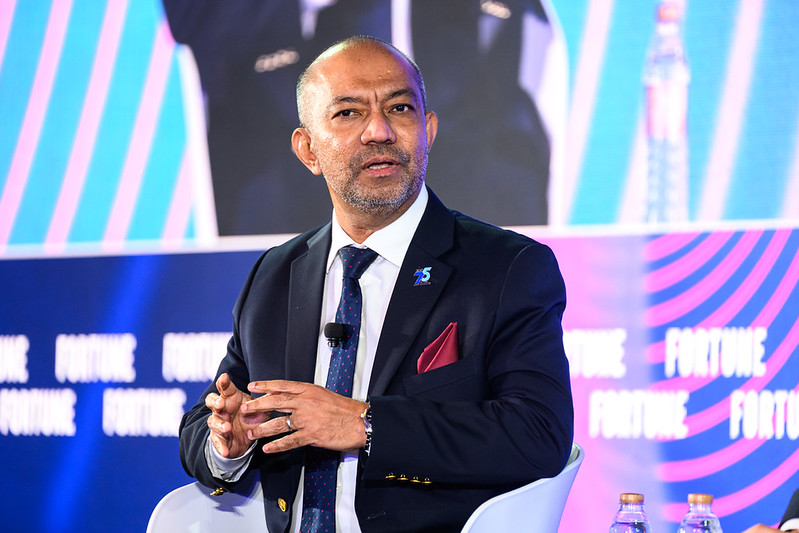
Smaller companies, including micro, small and medium-sized businesses, may lack the money, technical capacity and skills needed to provide the immediate quotations and responses now expected by travelers.
Destinations with greater resources were adopting AI more rapidly than smaller or lesser-known markets, potentially widening the competitive gap, Hamid said.
“AI is here. We have to be part of it, we have to adapt it, we have to maximize its usage,” he said.
Despite the positive demand outlook, Hamid said the sector also needed to contend with geopolitical uncertainty, natural disasters, changing visa regimes and rising operating costs.
Travel companies that once prepared five-year marketing plans must now be ready to adjust within days, he said, pointing to recent volcanic disruption in Indonesia and flooding in Nepal.
Mann said the continued expansion of Asia’s middle and affluent classes should support long-term travel demand, particularly within the region. However, destinations would need adequate infrastructure, connectivity and safety standards to turn that demand into sustained growth.