PG Soft, a world-class digital mobile games company, has been named as a sponsor of SiGMA Asia 2026, taking place at the SMX Convention Center, Manila.
The event brings together top government officials, industry leaders, C-level executives, affiliates, influencers, and innovators from across the global gaming sector. As Asia continues to enhance its reputation as one of the industry’s most exciting growth markets, SiGMA Asia is a key platform driving conversation, collaboration, and the future of gaming innovation.
PG Soft’s sponsorship includes significant brand visibility throughout the event, at a number of high-impact locations across the venue. As delegates arrive, PG Soft will be the first brand they see, with the company’s branding featured in the lobby.
The sponsorship will also give PG Soft excellent visibility during the two-day expo with a 60-second branded video broadcast inside the exhibition hall across 14 hanging HD screens. This premium position guarantees ongoing exposure in a busy, high-footfall environment, ensuring the brand is front of mind for attendees at every glance.
A PG Soft spokesperson said: “SiGMA Asia is a must-attend event on the iGaming calendar, and Manila is one of the most exciting markets in the region. We’re very pleased to be supporting this summit and look forward to presenting our brand to the influential audience that SiGMA Asia continues to attract.”
Being a commercial partner of this influential event highlights PG Soft’s ongoing commitment to engaging with key markets in Asia and supporting SiGMA’s mission to connect and inspire the global iGaming community.
The renowned casino entertainment powerhouse Play’n GO has announced that it has been granted a license to supply online gaming content in the Canadian province of Alberta, marking a significant milestone in the company’s continued expansion across regulated North American markets.
The license, awarded by the Alberta Gaming, Liquor & Cannabis Commission (AGLC), enables the company to provide its portfolio of premium online casino titles to licensed operators in the province, ahead of Alberta’s planned go‑live later this year.
Alberta represents an important new regulated opportunity within Canada, complementing Play’n GO’s established presence in Ontario and Quebec, and reinforcing the company’s long‑standing commitment to operating exclusively within regulated jurisdictions.
Commenting on the achievement, Magnus Olsson, Chief Commercial Officer at Play’n GO, said: “Being granted a license in Alberta is another important step in our North American growth journey and further strengthens our presence in Canada. Regulated markets are the foundation of our business, and Alberta represents an exciting opportunity to expand our footprint in a jurisdiction that shares our commitment to high standards, player protection and long‑term sustainability.”
The Alberta license forms part of Play’n GO’s broader strategy to grow through regulated market expansion, working closely with licensed operators to deliver high‑quality, compliant content built on innovation, responsibility and lasting commercial value.
As part of its market entry preparations, Play’n GO has aligned its technology and game portfolio with Alberta’s regulatory standards and requirements, with an initial batch of game titles undergoing certification to ensure launch readiness.
Aristocrat’s RMG and iGaming arm, Aristocrat Interactive, has announced an expanded agreement with ZEAL to launch its NeoGames Studio portfolio across all 16 German states through ZEAL’s flagship brand, LOTTO24, marking the company’s 19th deal in Europe and further strengthening its regional presence.
Extending a three-year collaboration, the deal moves beyond current Aristocrat Interactive content to deliver NeoGames Studio’s top-performing digital titles to German players at scale for the first time.
“We are the provider that empowers operators to realise their full digital potential,” said Aida Bachner, Senior Director, EMEA and LATAM Business and Customer Development at Aristocrat Interactive. “This expansion reflects the strength of our relationship with ZEAL and our shared focus on delivering innovative, high-quality content that today’s players expect.”
“Together with Aristocrat Interactive, we are expanding our digital games offering with premium content tailored for the German market“, shared Alex Green, Vice President of Games at ZEAL. “The addition of NeoGames Studio’s portfolio supports our ambition to continuously deliver innovative, entertaining, and responsible gaming experiences to LOTTO24 players nationwide.”
NeoGames Studio, a leading developer of digital games, brings more than 20 years of experience creating engaging content that supports responsible gaming. Now in its third year as part of Aristocrat Interactive’s iLottery division, the studio offers a portfolio of over 200 titles to operators worldwide.
Under the terms of the agreement, ZEAL plans to launch approximately 10 to 12 new games annually from the NeoGames Studio portfolio. Integration is already underway following the March signing, with launch expected in late 2026, marking the next phase of Aristocrat Interactive’s continued growth in Europe.
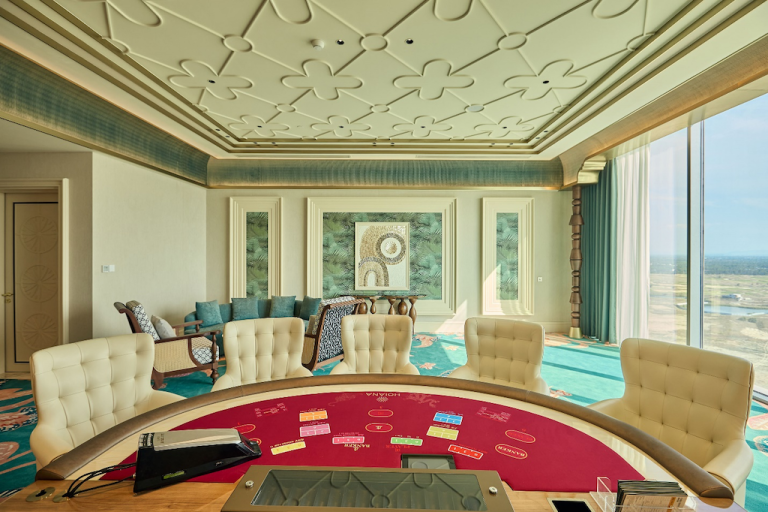
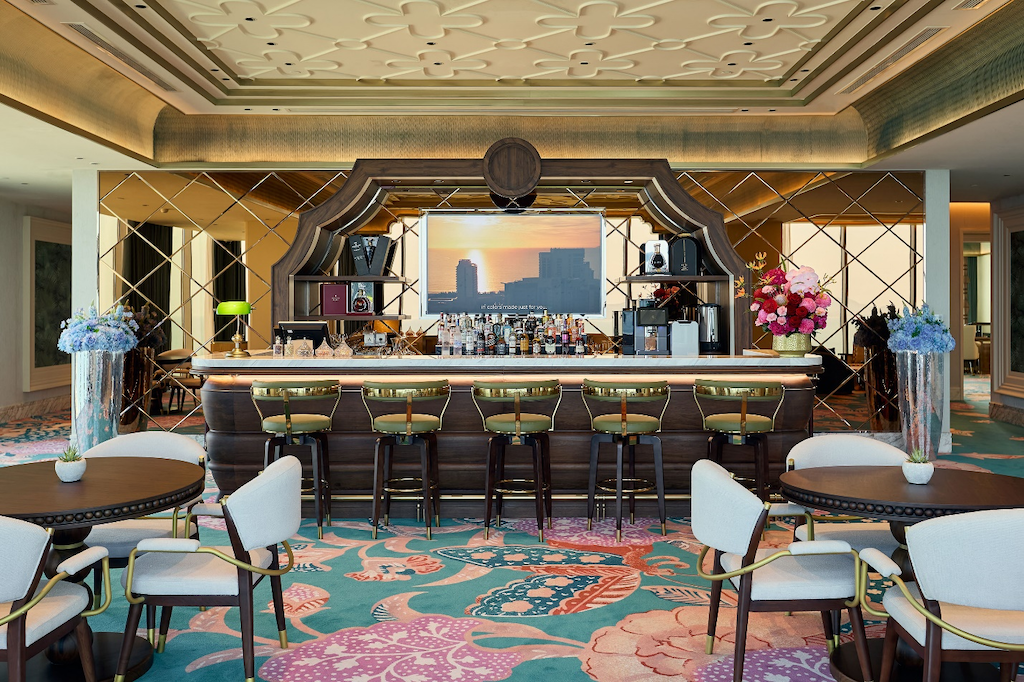
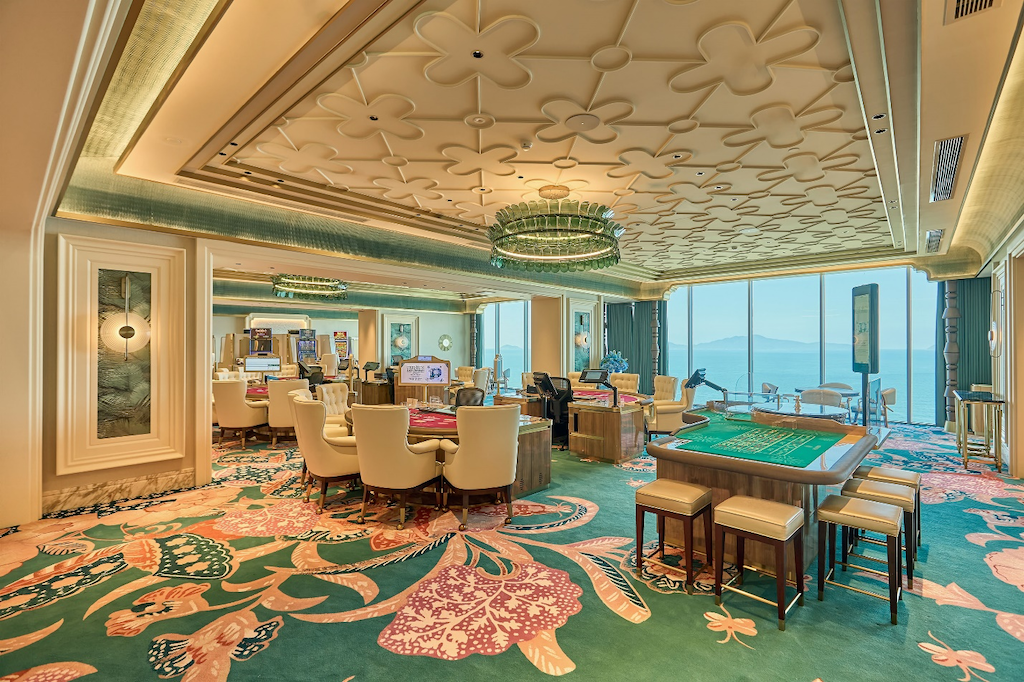
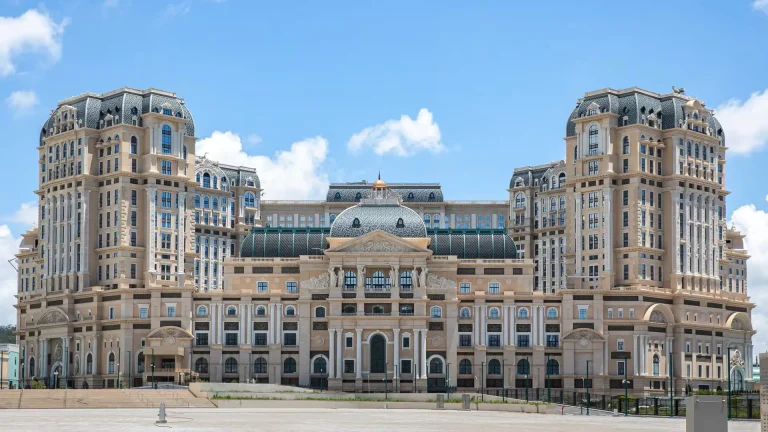
Hoiana Resort & Golf has launched the Sky Casino, a new VIP gaming venue reserved exclusively for top-tier Hoiana Rewards members, in a move to strengthen the integrated resort’s premium offering on Vietnam’s central coast.
Located on the 19th floor of Hoiana Hotel & Suites, the Sky Casino is accessible only to members holding Voyager and Envoy status under the Hoiana Rewards program. The venue is designed to provide a more secluded environment for high-stakes gaming, away from the energy of the main casino floor.
According to the operator, the space features a curated selection of core gaming products to ensure VIP guests have immediate access to their preferred games, alongside an upscale food and beverage program. Private salons are also available for booking, offering uninterrupted sessions tailored to individual guest preferences. The venue further includes the Sky Bar, where guests can enjoy drinks and panoramic views of the resort.
In parallel, the property continues to operate Hoiana Premium on the ground floor, an area open to Explorer, Voyager, and Envoy members who prefer to remain closer to the main gaming floor while still enjoying a more private atmosphere with personalized service.
Hoiana Resort & Golf, located in Quang Nam Province south of Da Nang, opened in 2020 and operates a foreigner-only casino with 140 gaming tables and more than 270 electronic gaming machines, alongside four five-star hotels and a Robert Trent Jones II-designed golf course.
The integrated resort is owned by Hoi An South Development Ltd (HASD), which is 75 percent controlled by Hong Kong-based VMS Group following a shareholding restructure completed in early 2025. The remaining stake is held by VinaCapital. CEO Alan Teo, appointed in February 2025, is overseeing a $1 billion Phase 2 expansion as part of a long-term development plan totaling $4 billion across seven phases through 2029.
Macau recorded about 3.4 million visitor arrivals in April 2026, up 11.3 percent year-on-year, according to data from the Statistics and Census Service (DSEC). The increase was mainly driven by same-day visitors, which rose 19.4 percent to about 2.1 million during the month.
Overnight visitors increased at a slower pace, rising 0.6 percent year-on-year to about 1.3 million. The average length of stay shortened by 0.1 day to 1.0 day, while the average stay of overnight visitors remained unchanged at 2.3 days.
Mainland China remained Macau’s largest visitor source market, with arrivals rising 13.1 percent year-on-year to about 2.4 million in April. Among them, visitors traveling under the Individual Visit Scheme increased 16.1 percent to about 1.2 million.
Arrivals from Hong Kong grew 3.1 percent to about 680,500, while visitors from Taiwan rose 32.2 percent to about 101,500.
International visitor arrivals reached about 254,100 in April, up 10.5 percent year-on-year. Visitors from the Philippines, Thailand and Singapore increased, while arrivals from Indonesia, Malaysia and India declined. South Korean visitors rose 9.1 percent to about 40,600, while arrivals from the United States increased 13.9 percent to about 15,300.
In the first four months of 2026, Macau received about 14.7 million visitors, up 13.1 percent year-on-year. Same-day visitors rose 20.1 percent to about 9.1 million, while overnight visitors increased 3.3 percent to about 5.6 million.
Fitch Ratings has downgraded SJM Holdings Limited, lowering the Macau gaming operator’s Long-Term Foreign-Currency Issuer Default Rating to ‘B+’ from ‘BB-’, citing a slower-than-expected leverage improvement path following market share losses from the closure of satellite casinos and weak performance at Grand Lisboa Palace.
The rating agency also downgraded the senior unsecured rating and the rating on outstanding notes issued by subsidiary SJM International Limited to ‘B’ from ‘BB-’, with a Recovery Rating of ‘RR5’. The outlook is stable.
‘The downgrade reflects Fitch’s view that SJMH’s leverage trajectory is no longer consistent with its previous rating level,’ the agency said, adding that leverage metrics are expected to remain outside its ‘BB-’ threshold over the next two years.
Fitch forecasts SJM’s EBITDA leverage to improve to 7.8 times in 2026 and 6.5 times in 2027, from more than 9 times in 2025. However, this would remain well above the agency’s previous downgrade threshold of 5.0 times.
The agency expects Fitch-adjusted EBITDA to rise to HK$3.7 billion ($472.1 million) in 2026 and HK$4.2 billion ($535.9 million) in 2027, compared with HK$3.0 billion ($382.8 million) in 2025 and HK$900 million ($114.8 million) in the first quarter of 2026.
SJM’s market share fell to 9.6 percent in the first quarter of 2026, below Fitch’s previous 2026 assumption of 10.7 percent. The agency said management is seeking to improve the utilization of returned satellite tables by opening new gaming areas at Grand Lisboa Palace and Casino Lisboa.
Fitch also noted continued weakness at Grand Lisboa Palace, where mass-market volume growth slowed to 3 percent year-on-year in the fourth quarter of 2025 and declined 1 percent in the first quarter of 2026. The agency expects the property’s market share to remain at around the mid-2 percent level.
SOFTSWISS has announced the final call for speakers for the Tech Race Summit, its high-load technology conference taking place in Warsaw on 10 September 2026.
The organiser is calling on experts with bold technical and business ideas to join the Blackbox Track — one of three stages at Tech Race Summit — and present experimental tools, unconventional approaches, and cutting-edge technologies.
Built around the idea that high-load industries drive technological innovation, the summit aims to share this expertise with the wider tech community and foster cross-industry dialogue.
Blackbox sessions will spotlight forward-thinking concepts, with SOFTSWISS seeking speakers ready to showcase live demos, emerging tools, and innovative solutions shaping the future of high-load systems, alongside industry leaders such as Amazon and Fastly.
Suggested topics include:
High-load infrastructure and scaling;
AI tools for engineering and operations teams;
Observability and monitoring;
Kubernetes and cloud operations;
Developer productivity;
Security engineering;
Automation and internal tooling;
Data processing and system reliability;
Business workflows improved through technology.
The organiser welcomes submissions from specialists working both inside and outside iGaming, particularly teams solving operational and technical challenges at scale.
Sergey Kastukevich, CTO at SOFTSWISS, shared: “We want these sessions to show not only what works today, but what could define the next generation of technology practices. We are looking for teams experimenting with new architectures, testing unconventional ideas, and pushing systems beyond standard approaches. The strongest talks are grounded in real experience – the risks teams took, the lessons they learned, and the solutions others may soon need themselves.”
Tech Race Summit is designed as a meeting point for technical and business communities working on large-scale systems.
The event features three conference tracks:
Vision Track – cross-industry discussions and keynotes for business leaders navigating technological change. The session will feature topics such as AI’s impact on engineering and AI changing the cybersecurity landscape, with speakers from Amazon and Oracle
Solution Track – technical deep dives and case studies, featuring specialists from Cloudflare and Scylla DB
Blackbox Track – hands-on sessions focused on practical expertise and implementation with innovative infrastructure solutions.
The Tech Race Summit will bring together around 1,000 engineers, architects, technical specialists, product leaders, and technology executives from iGaming and the wider tech sector.
FANTASY, Zitro’s latest and most innovative cabinet, continues its expansion across Argentina with a new installation at the renowned Bingo Luján, operated by Argentone. Featuring Lion Falls, the cabinet arrives shortly after its debut in the country.
This rollout is part of Zitro’s expansion strategy across Latin America and further reinforces the company’s commitment to Argentina, a key market where it has been building a long-term presence for years. With this new installation, Zitro continues to bring its latest and most innovative products to operators and players across the region.
FANTASY has established itself as one of Zitro’s most advanced cabinets thanks to its spectacular graphics and multimedia features, delivering a fully innovative entertainment experience. Lion Falls, the cabinet’s exclusive title, stands out for its outstanding performance and player reception across multiple markets.
“This addition represents exactly the kind of premium product we look for to elevate our offering,” said Carlos Gonzalez, Founder of Bingo Luján. “Partnering with an industry leader like Zitro, backed by FANTASY’s growing momentum, gives us absolute confidence in the results it will deliver.”
Alejandra Burato, Zitro’s Regional Director for Latin America, added: “We are very proud to keep building FANTASY’s presence in Argentina alongside such important operators. The excellent response the cabinet has achieved since its debut confirms its strong potential in the market, and we will soon be announcing new installations across the country.”
Over the past 20 years, the iGaming industry has grown from a promising niche in online entertainment into an independent ecosystem with a complex architecture. To keep up with rapid scaling and hold the attention of their target audience, operators have actively introduced slots with intricate mechanics and bonus symbols, as well as various sports betting types.
As a result, the barrier to understanding these games has risen, and player protection has become one of the industry’s key challenges.
Key Points
Education over bans and restrictions
Global betting company 1xBet conducted a major study – the Player Protection Index Series – whose findings confirm that only 20% of players use the responsible gambling tools developed by operators. This is a problem of perception, not functionality.
85.7% of operators are willing to take on greater responsibility for organizing safe gambling.
96% of respondents believe that success can only be achieved through close collaboration with regulators.
Players in the at-risk category often do not believe they need counseling support, self-exclusion tools, or any other form of assistance. Part of this comes down to how responsible gambling tools are perceived: users see them as restrictions rather than a means of expanding their own rights and options. At the same time, 70% of operators believe that players who follow safe betting principles perform better in the long run.
It is also worth considering not just the content of player communications but also their format. Many users mistakenly treat responsible gambling warnings as spam or advertising. The reason is simple: such notifications often arrive at the wrong time.
The gap between understanding the responsible gambling problem and finding a solution
According to 1xBet’s study, 71% of operators believe that players should take responsibility for their own safe gambling practices. The paradox is that only 14% of respondents consider their own educational and awareness efforts to be highly effective. Players should certainly take the initiative, but only when they have the right tools.
Simon Westbury, Strategic Advisor for 1xBet, put it well.
“You cannot expect responsibility from a player who is kept in the dark.”
This is why operators need to shine a light through educational programs that communicate the value and importance of this approach.
The main obstacles to player education
The 1xBet study revealed several key barriers facing operators.
67.6% of respondents identified a lack of interest from players themselves as the main obstacle.
48.7% pointed to commercial pressures that make it difficult to invest in education.
At the same time, initiatives aimed at player education are often held back by regulatory restrictions. This was noted by 29.7% of operators, while 27% pointed to a general sense of apathy across the industry. That said, 60% of operators agree that player education is a key element of safe betting. Everyone in the iGaming industry is ready for change, and the right mechanisms need to be found.
What needs to change
The 1xBet study found that:
89.2% of operators use deposit limits, making them the most popular responsible gambling tool in the industry.
Self-exclusion schemes remain the most effective method for responding to detected risk patterns in player behavior, with 48.7% of respondents confirming their use.
Self-assessment questionnaires, however, are seen as less effective, with 38% of respondents saying they rarely make a difference.
The development of new approaches to building a responsible gambling culture is already underway. At the same time, operators stress that the industry needs to do more on personalization, moving away from fine print in terms and conditions and toward real in-game prompts. African operators, for instance, are already reaching out to players directly in real time after big wins, while Latin American operators are increasingly turning to artificial intelligence to track behavioral risk patterns more effectively.
It is also important to integrate education seamlessly into the product experience of iGaming companies, from onboarding through to every moment of gameplay. At the same time, terminology and tools need to be standardized. The key is for all major areas to work together as a unified whole, with operators and regulators moving in step.
Simon Westbury
Based on the research findings, Simon Westbury, Strategic Advisor for 1xBet, shared his ideas on how player education and awareness should work in the iGaming industry:
“84% of respondents to the latest installment of the Player Protection Index Series believed Player Education is the foundation of safer gambling. However, that education cannot be monolithic, we need to understand players in Africa, and LatAm do not view gambling as a means of revenue generation, and in other markets, we need to ensure that players understand the terminology of gambling, such as RTP and RNG. Finally, as an industry we need to entrain, “Safe Play” from the design to delivery stage and move from performative compliance.”
Key figures in the iGaming industry recognize the importance of player education and awareness as drivers of a responsible betting culture. Moving from formal restrictions on paper to real influence over user behavior is not only a major challenge, but also a unique opportunity for businesses to lead a new era.
If you want to be at the heart of innovation, join 1xPartners, a flagship affiliate program that covers more than 150 countries and delivers high conversion rates from registration to deposit.
Over 500,000 partners have already experienced the effectiveness of real-time analytics tools, flexible collaboration models (RevShare, CPA, Hybrid), and an extensive creative library.
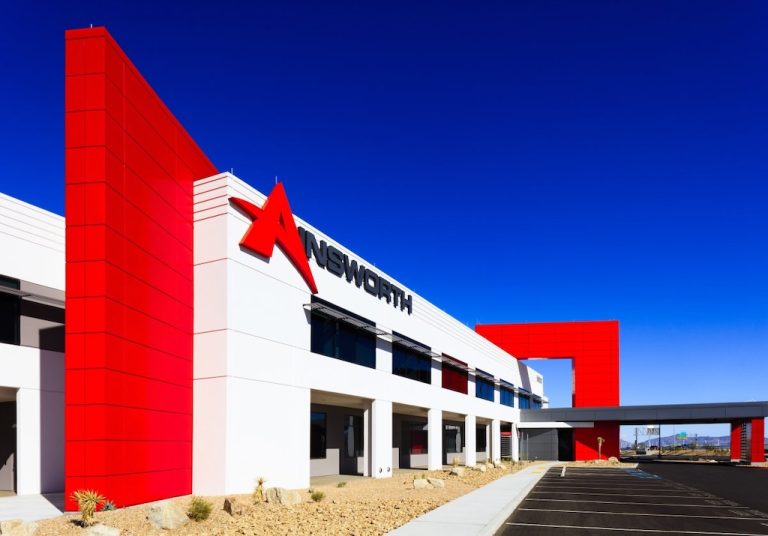
Australian gaming machine manufacturer Ainsworth Game Technology expects to report a profit before tax of approximately AU$1.0 million ($710,000) for the six months ending June 30th, 2026, a sharp decline from the AU$13.9 million ($9.93 million) recorded in the previous corresponding period.
In an update to the ASX on May 22nd, 2026, Ainsworth said total revenue for the half-year is forecast at approximately AU$116 million ($82.86 million), down roughly 24 percent from AU$152.1 million ($108.64 million) in the previous corresponding period and below the AU$138.7 million ($99.07 million) reported in the six months ended December 31st, 2025.
The company attributed the decline primarily to weaker performance in North America, citing reduced outright sales, fewer units under gaming operations, increased competitive pressure, and adverse economic conditions in the region.
By contrast, the Asia-Pacific region is expected to deliver a revenue increase of approximately 4 percent on the previous corresponding period, supported by the rollout of the Raptor cabinet and subsequent cabinet variations released in early 2026. The region is forecast to contribute approximately 31 percent of total revenue, up from 23 percent, with segment margins improving to 25 percent from 23 percent. In Latin America and Europe, revenue is expected to fall by approximately 13 percent, although segment margins are projected to improve.
Underlying EBITDA, excluding currency impacts, is expected to be approximately AU$13 million ($9.29 million), compared with AU$26.9 million ($19.21 million) in the previous corresponding period.
Net debt is forecast to rise to approximately AU$14 million ($10 million) from AU$11.8 million ($8.43 million) at December 31st, 2025. Investment in research and development is expected to represent approximately 22 percent of total revenue, up from 18.5 percent in the second half of 2025.
Chief Executive Officer Ryan Comstock said new sales and product strategy leadership had been appointed in North America following organizational changes in the latter part of FY25. “Our strategy reflects initiatives implemented, resulting in the improvements in Australian revenues, which is helping to offset ongoing challenging market conditions and competitive pressures across our international markets, while maintaining investment in product development,” he said.