

Genius Sports Co-Founder and CEO Mark Locke believes the long-term growth of sports prediction markets should be viewed through the lens of underlying consumer demand rather than the fate of any individual operator or regulatory framework.
In a note issued on Monday, Locke argued that while today’s prediction-market models are unlikely to remain unchanged, demand for sports wagering in the United States will continue regardless of how the legal and regulatory landscape develops.
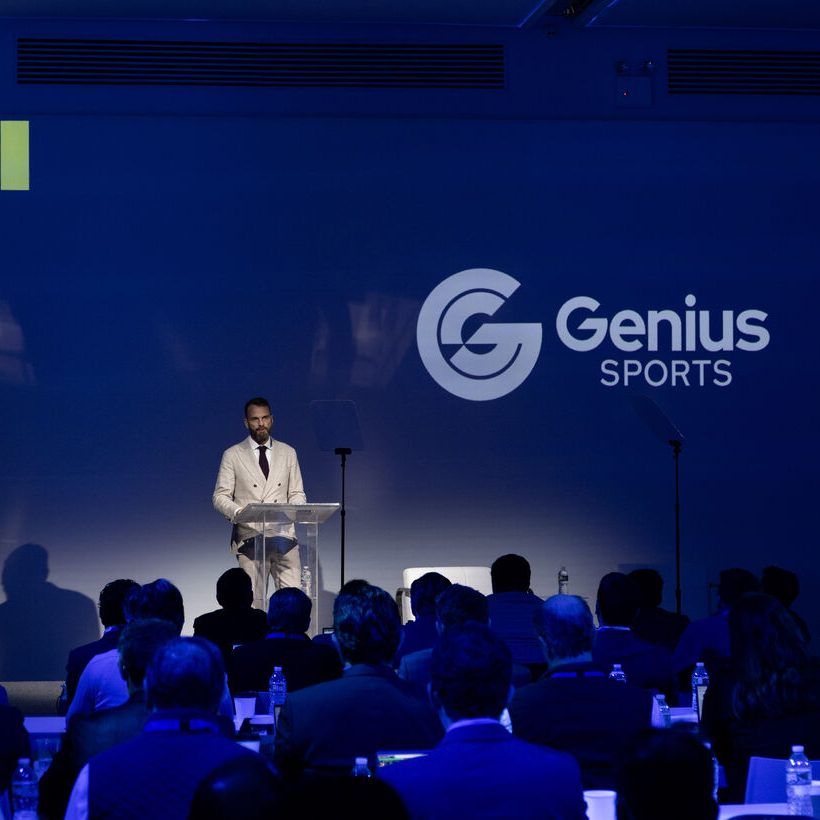
“Prediction markets did not invent the desire to wager on a sporting outcome. They offer another way to express it, and what is durable is the demand underneath.”
Mark Locke
Locke said Genius Sports benefits from multiple areas of the sports wagering ecosystem, supplying official data, settlement and integrity services to operators including DraftKings, FanDuel, Kalshi and Polymarket, while also providing solutions to market makers and customer acquisition services through its media platform.
According to Locke, the emergence of prediction markets is creating additional commercial opportunities rather than replacing existing ones.
Citing research from Eilers & Krejcik Gaming, he noted that a significant portion of Kalshi‘s retail activity comes from states where regulated online sportsbooks are unavailable, suggesting that prediction markets are attracting new participants rather than simply cannibalising sportsbook activity.
The CEO also argued that future regulatory developments may ultimately increase the value of trusted settlement data and integrity solutions.
“A market maker can form a price from public information and its own models,” he said. “Settlement answers a different question: what happened.”

Locke highlighted a high-profile September incident in which Kalshi initially settled a college football market incorrectly before reversing the outcome after a replayed final play changed the result. He suggested the episode demonstrated the importance of authoritative data sources and robust settlement procedures.
While acknowledging that legal battles continue, Locke cautioned against viewing any potential court victory as a definitive resolution for the sector.
“A substantive victory for prediction market platforms at the Supreme Court would settle which laws apply to sports-event contracts offered on CFTC-registered exchanges,” he wrote. “It would leave product rules, taxes and consumer safeguards open.”
He also pointed to growing attention from state regulators and ongoing efforts by the Commodity Futures Trading Commission to establish a more detailed framework for event contracts.
Despite those uncertainties, Locke remains optimistic about the sector’s future.
He argues that prediction markets have introduced new liquidity into sports wagering through additional customers, institutional capital and market-making activity. While regulations regarding access, taxation and product offerings may change over time, he expects wagering activity to remain under some form of regulated framework.
“Americans are going to keep wagering on sports, and Genius will be paid however they do it.”
Mark Locke