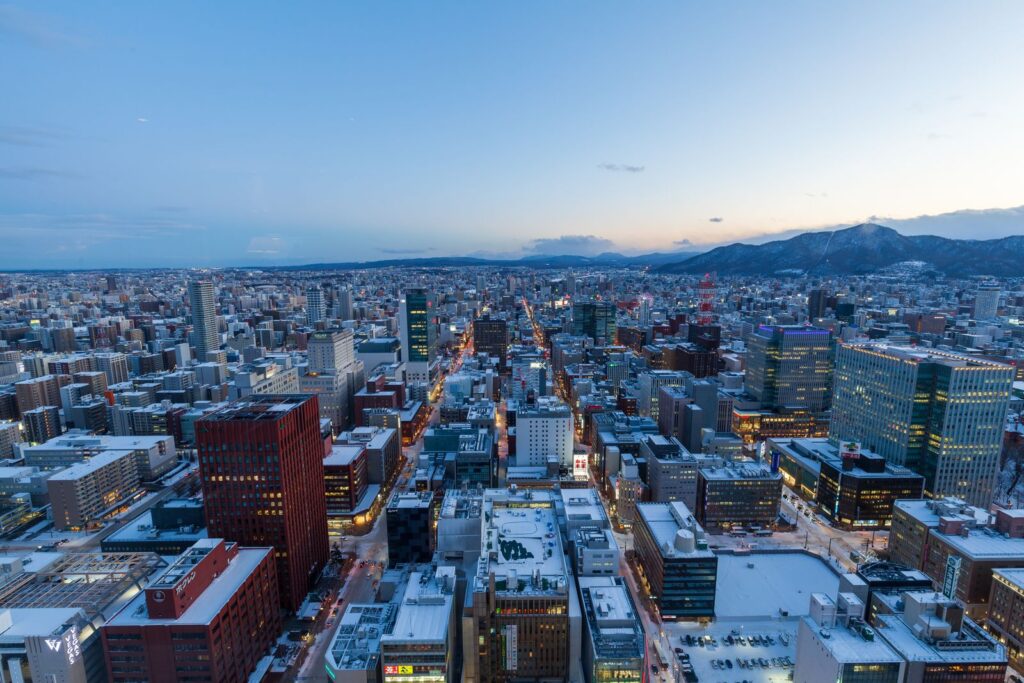
Hokkaido will stay out of Japan’s next integrated resort application round, but its governor has asked the national government to loosen facility rules the prefecture wants adjusted for locations outside Japan’s major metropolitan areas.
Governor Naomichi Suzuki took the request to Japan Tourism Agency chief Norio Kimura on Tuesday, GGRAsia reported, citing the Hokkaido Shimbun newspaper. The prefecture will not apply in the window running from May 6 to November 5, 2027, though it plans to keep studying the concept. According to the same report, Hokkaido regards easier criteria as a “prerequisite” for taking the idea further.
The rules Hokkaido wants changed
The request centres on MICE space. A 2019 cabinet order gives developers three routes: a conference hall for at least 6,000 people with 20,000 square metres of exhibition space; a hall for 3,000 to 6,000 people with 60,000 square metres; or a hall for 1,000 to 3,000 people with 120,000 square metres. Hotels must also offer at least 100,000 square metres of combined guest room floor area.
Those thresholds have been a sticking point for some time. When the prefecture published its revised IR policy proposal in September, it already called for lower MICE and accommodation requirements. That document named no candidate site and made no commitment to the 2027 round, although Tomakomai had signalled interest under the current rules.
Business pressure, public resistance
The outcome falls short of what a local business lobby had sought. In September, eight Hokkaido business groups urged Suzuki to begin site discussions and set aside funding and staff, warning that the opportunity could vanish if the remaining national slots were filled.
Opinion inside the prefecture has run the other way. A Hokkaido Shimbun survey cited in a November 4 editorial found 57% of residents opposed to an IR and 24% in favour, close to the result of an April poll. The editorial said the statutory steps for a Tomakomai bid appeared unlikely to be finished in time, and that the prefecture was looking toward a third solicitation expected around 2030. It also noted that Suzuki is widely expected to seek a third term at next spring’s gubernatorial election.
What it means for the national programme
Japan’s IR law allows up to three resorts, and only one has been approved so far: the JPY1.51 trillion MGM Osaka project, under construction for a late 2030 opening. Hokkaido’s withdrawal from the coming round removes one of the longest-discussed candidates from next year’s field, while keeping it in play if Tokyo is willing to reconsider the standards.
Any change would need action at the national level. AGBrief found no published response from the Japan Tourism Agency as of Wednesday.