
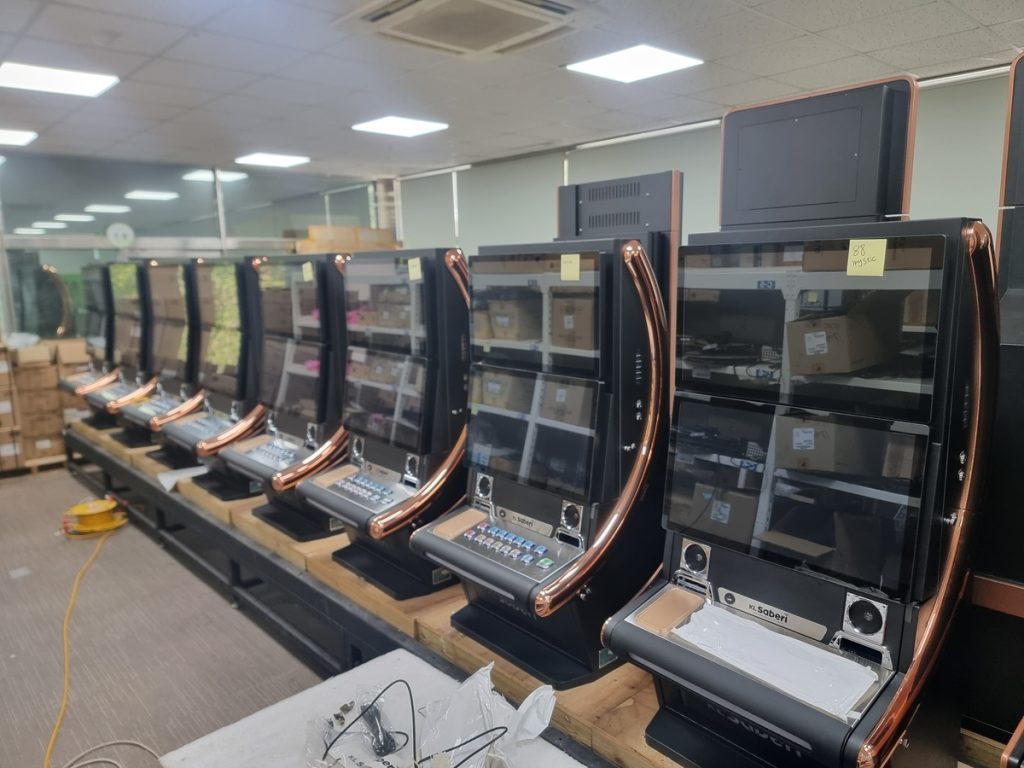
Kangwon Land’s slot machine manufacturing business, which operates under the KL Saberi brand, posted six consecutive years of losses, prompting calls for a review of its Philippine sales office as sales remained weak.
According to NewsPim, citing findings disclosed by People Power Party lawmaker Koo Ja-keun, the business accumulated losses of approximately KRW14.8 billion ($11 million) between 2020 and 2025.
The annual loss reached KRW3.4 billion ($2.5 million) last year, widening by around 17 percent from 2024.
Launched in 2017, the business develops and manufactures slot machines for Kangwon Land’s own casino and external customers. Its machines have also been supplied to other South Korean casino operators, including Grand Korea Leisure and Golden Crown Casino.
Kangwon Land opened its Philippine office in 2022 to expand overseas sales. By the end of August 2026, it had spent KRW700 million ($521,000) on expenses including office, staff housing and vehicle leases.
However, outright machine sales in the Philippines fell from 42 units in 2024 to none in 2025, with six sold in 2026. A further 12 machines were covered by separate conditional sales and test-bank arrangements this year but had yet to generate revenue.
The office had also failed to secure new distributors, distribution agreements or memorandums of understanding since opening.
Kangwon Land said the Philippines was the exclusive territory of its existing Southeast Asian distributor, RGB. Its office therefore focused on managing that relationship and conducting joint sales activities.
Koo questioned whether the office justified its additional costs, noting that there was no separate system to assess its performance.
Kangwon Land’s own comparison showed that running the office cost KRW203 million ($151,000) in 2025, or KRW62 million ($46,000) more than sending one employee to the Philippines on a business trip each month.
“We need to review the entire operating framework, from the need for the overseas office to the duties and allowances of the staff assigned there,” Koo said.
The lawmaker also raised concerns about staffing. His office’s analysis of immigration records found that the employee assigned to the Philippines spent 243 days in South Korea between January 2024 and September 6th, 2026, roughly a quarter of the posting period.
Those stays included work, medical appointments, health checks and family care. The employee received approximately KRW40 million ($30,000) a year in overseas allowances.