
Philippine licensed gambling operators could lose most public-facing advertising and sponsorship channels under a bill proposed by Senator Francis “Chiz” Escudero, extending restrictions beyond outdoor displays to television, radio, print, websites, apps and social media.

Escudero filed Senate Bill No. 2347, or the proposed Gambling Advertising Prohibition Act, in late July 2026.
Despite being described in some reports as an online gambling advertising ban, the proposal is broader. It targets advertising and sponsorship connected to gambling products and services generally, regardless of whether the promotion appears online, through traditional media or in a physical public space.
Escudero has framed the measure as a gambling equivalent of the Philippines’ tobacco controls. “It’s about time that we regulate the gambling industry the same way we regulated tobacco two decades ago,” he said, referring to Republic Act 9211, the Tobacco Regulation Act of 2003.
What would the bill prohibit?
SB 2347 would prohibit gambling advertisements across television, radio, newspapers, magazines, billboards, websites, online platforms and social media. It would also ban celebrity and influencer endorsements, product placements, promotional giveaways, branded merchandise appealing to people under 21 and gambling sponsorships involving sports, concerts and cultural events.
Promotional bonuses and other incentives intended to encourage betting would also be restricted.
Limited communications would remain possible inside licensed gambling establishments and through an operator’s official website or mobile application, subject to age-verification controls for users aged 21 or above. Authorized communications would have to carry responsible gaming warnings.
The proposal provides a one-year transition period after the law takes effect, allowing operators, advertisers, broadcasters and platforms to wind down existing agreements. No new advertising or sponsorship agreement could be entered into during that period except where necessary to conclude existing obligations.
Penalties would rise with repeated violations. A first offense could result in a fine of up to PHP200,000 ($3,300), imprisonment of up to one year, or both. A second offense carries a fine of up to PHP300,000 ($4,900) and up to two years, while a third offense could bring a PHP500,000 ($8,200) fine, up to three years in prison and the revocation of business permits or licenses.
For corporations, the penalties would apply to responsible officers. Foreign nationals convicted under the measure would face deportation after serving their sentence, a provision with direct implications for the foreign management common across Philippine-licensed online operations.

Why online advertising matters
The inclusion of websites, apps, affiliates and social media could carry particular commercial weight for online gaming operators because digital marketing is central to acquiring and retaining players.
No authoritative public breakdown of Philippine gambling advertising expenditure by media channel is currently available. However, international evidence illustrates the scale of operators’ reliance on digital promotion.
The UK Gambling Commission has cited research estimating that 80 percent of gambling marketing expenditure was directed online. The total included direct internet marketing, which represented 48 percent of spending, affiliate marketing at 19 percent and social media at 10 percent.
The figures were based on 2017 expenditure and should be treated as an international benchmark rather than an estimate for the Philippines.

From self-regulation to statutory prohibition
The proposal would build on restrictions already introduced by the Philippine Amusement and Gaming Corporation and the Ad Standards Council.
PAGCOR ordered licensed operators to remove gambling-related outdoor advertising in July 2025, setting an August 15th deadline for billboards and public transport displays. Days later, a memorandum of understanding with the council signed on July 16th, 2025 made gambling advertising across television, radio, online and outdoor media subject to pre-screening, placing gambling alongside alcohol, medicines and food supplements on the council’s list of categories requiring prior clearance.
The regulator tightened its approach again in June 2026, when it ordered licensees to replace responsible gaming advertising with materials promoting a new 24-hour national problem gambling helpline.
Escudero argues that voluntary and regulatory measures are insufficient because they do not establish legally enforceable nationwide obligations covering every company involved in advertising and distribution. SB 2347 would introduce penalties applying to operators, advertisers, media companies, platforms and responsible corporate officers.
For licensed operators, the central commercial issue is whether official websites and apps would provide enough room to distinguish regulated brands from illegal platforms after most public advertising disappears. Enforcement would also be important: licensed companies are easier to identify and sanction, while offshore or unlicensed operators may continue reaching Filipino users through accounts, affiliates and websites outside the country.
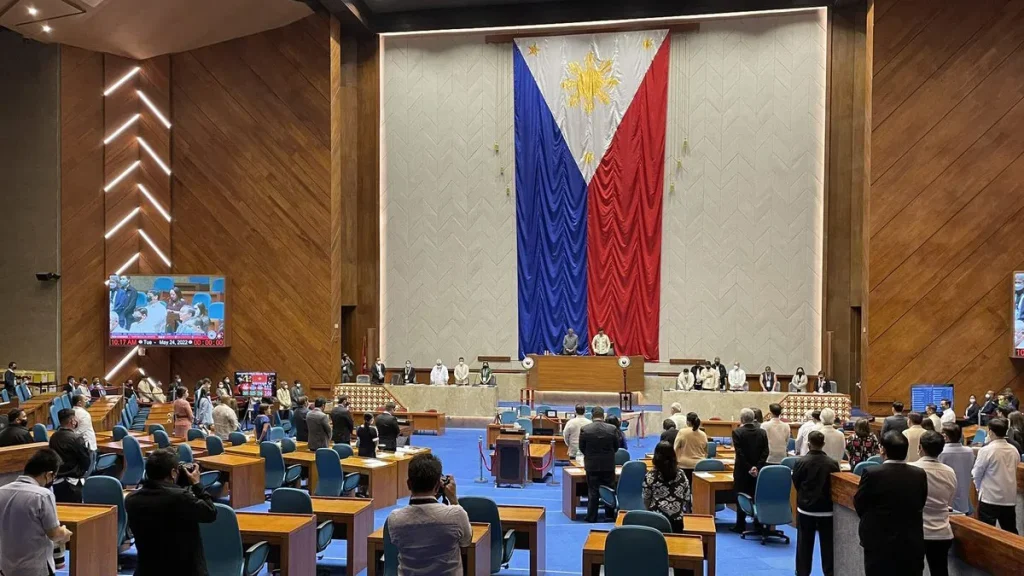
SB 2347 remains a proposal and must pass both chambers of Congress before reaching the president. Its final impact will depend on the definitions, exemptions and enforcement responsibilities retained during the legislative process.