
SJM Holdings’ loss attributable to its owners widened by 61.7 percent year-on-year to HK$295 million ($37.8 million) in the first half of 2026, despite improved adjusted EBITDA and margins under its new direct casino management model.
The wider loss came alongside higher depreciation and finance costs, according to the company’s interim results released on Tuesday.
Total group net revenue fell by 20.8 percent to HK$11.59 billion ($1.49 billion), while net gaming revenue declined by 22.5 percent to HK$10.56 billion ($1.35 billion).
Adjusted EBITDA nevertheless rose by 3.3 percent to HK$1.70 billion ($218 million). The adjusted EBITDA margin increased by 3.5 percentage points to 14.7 percent.

Satellite exit reshapes revenue and operations
The period was SJM’s first full interim reporting period following the closure of its satellite casinos in December 2025. Satellite venues had contributed throughout the first half of last year, making the two periods not directly comparable, the company said.
Reported gross gaming revenue fell by 18.5 percent to HK$12.08 billion ($1.55 billion), while SJM’s share of Macau casino GGR declined to 9.8 percent from 12.9 percent.
SJM said the lower reported GGR primarily resulted from the transition to direct management. Its other Peninsula properties, however, recorded an 85.7 percent increase in aggregate GGR, supported by the expanded gaming area at Casino Lisboa and contributions from Casino L’Arc Macau.

Daisy Ho, chairman of SJM Holdings and managing director of SJM Resorts, said the period marked the completion of a “significant structural transition” as the group assumed direct management of its entire portfolio.
“This has strengthened our control over customer experience, cost structure and earnings quality across our properties, with the benefits already reflected in our operating performance and margin expansion,” Ho said.
SJM has redeployed tables and other resources from its former satellite casinos to directly operated properties. At Grand Lisboa Palace, the group increased table capacity and introduced new VIP and premium-mass gaming areas.
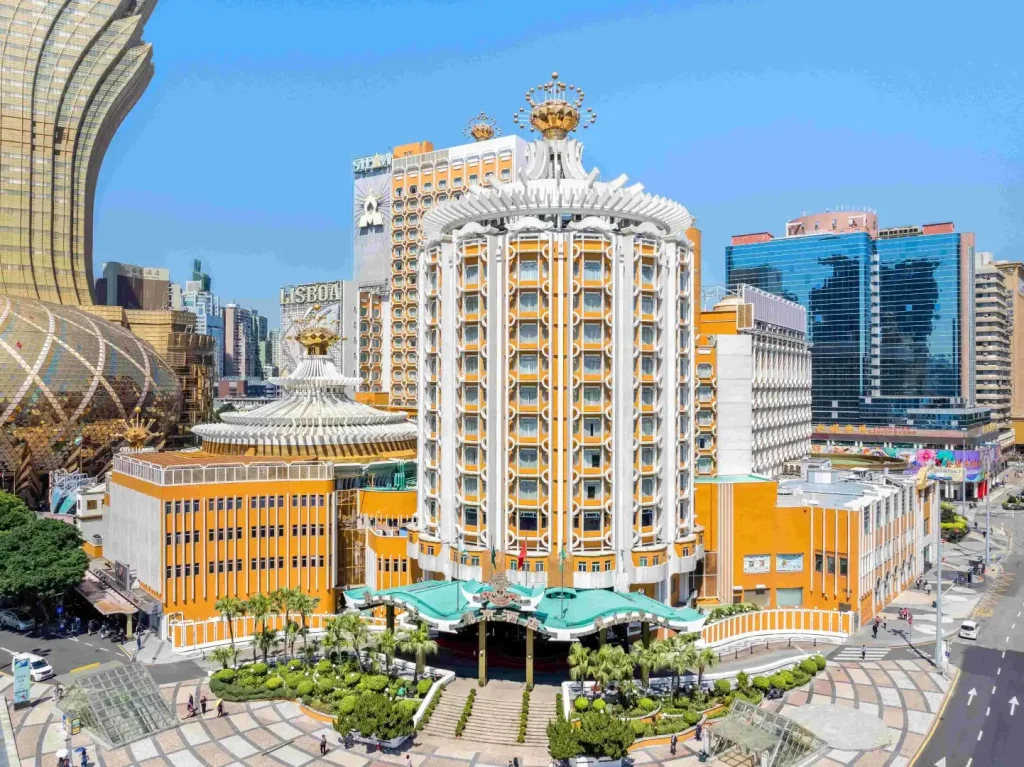
On the Macau Peninsula, the second phase of the Crystal Palace gaming area at Hotel Lisboa opened on August 10th. Around 400 refurbished hotel rooms are awaiting statutory inspection and approval.
Property performance diverges
SJM’s other properties comprise Casino Lisboa, Casino L’Arc Macau and Casino Oceanus at Jai Alai. Adjusted property EBITDA for the segment increased by 44.2 percent to HK$939 million ($120 million).
At Grand Lisboa Palace, GGR rose by 12.9 percent, while total revenue increased by 8.6 percent. Rolling volume grew by 16.9 percent, which SJM attributed to improvements in the VIP segment following targeted product and customer-experience enhancements.
However, adjusted property EBITDA at the Cotai resort fell to HK$22 million ($2.8 million) from HK$82 million ($10.5 million). SJM attributed the decline to restructuring costs following the satellite casino closures, increased customer reinvestment aimed at supporting retention and market-wide cost inflation.
Grand Lisboa Macau reported a 7.1 percent increase in GGR, while adjusted property EBITDA remained broadly unchanged at HK$860 million ($110 million).
Ho said SJM would continue differentiating its properties and strengthening its appeal among targeted customer segments.
“Through disciplined execution of these initiatives, we aim to deepen customer loyalty, improve portfolio performance, and support sustainable long-term growth,” she said.
As of June 30th, SJM held HK$3.49 billion ($447 million) in cash and deposits and had HK$30.22 billion ($3.87 billion) in debt.