

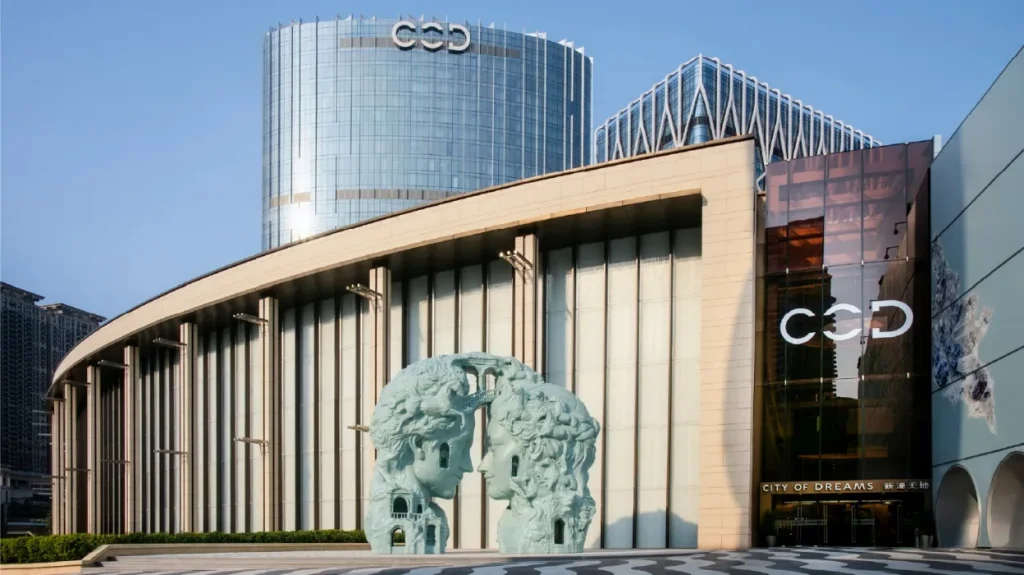
Selling City of Dreams Manila would create value for Melco Resorts & Entertainment and support further deleveraging, according to Seaport Research Partners, despite the Philippine integrated resort delivering better-than-expected second-quarter results.
Senior analyst Vitaly Umansky said Melco’s unsuccessful attempt to sell the property last year should not prevent the company from pursuing another transaction.
Seaport believes a sale would be ‘value creative’ even at a lower valuation than Melco had previously sought.
The brokerage argued that investor interest in the Manila property remained limited and described the business as ‘more of a burden than a benefit’ for Melco.
City of Dreams Manila delivered a stronger-than-expected performance in the second quarter, with property EBITDA increasing 9 percent year-on-year, according to Seaport’s estimates.
However, VIP rolling-chip volume fell 25 percent quarter-on-quarter, while a low VIP hold rate of 2 percent weighed on the property’s results. Mass-market gaming volume was broadly stable sequentially.
Seaport expects the Manila operation to remain largely stable but under continued pressure as competition in the Philippine capital intensifies.
Melco’s consolidated debt stood at $7.1 billion at the end of the second quarter, down from $7.9 billion in the first quarter of 2023.
The brokerage said the group’s leverage remained manageable and saw no significant refinancing risk. However, it believes selling City of Dreams Manila could accelerate debt reduction and allow Melco to concentrate resources on its core Macau operations.
Melco previously explored a potential sale of its interest in the Manila integrated resort but did not complete a transaction.
Intense competition limits Melco’s Macau share recovery
Melco reported second-quarter operating revenue of $1.25 billion, down approximately 6 percent year-on-year, while adjusted property EBITDA declined around 20 percent to $303.8 million.
Seaport described the group results as broadly in line with expectations. Better-than-expected performances in Manila and Cyprus partly offset weaker results in Macau.
The brokerage estimated that Melco’s Macau revenue fell approximately 9 percent year-on-year to $1.05 billion, while property EBITDA declined 26 percent to $249 million.
Hold-adjusted Macau property EBITDA fell about 16 percent to $258 million. Seaport attributed the weaker-than-expected result to low VIP hold and a 7 percent decline in non-gaming revenue.
Melco’s estimated Macau gross gaming revenue market share fell to 14.7 percent, down 1 percentage point year-on-year and 0.5 percentage points sequentially.
Seaport expects the operator’s share to remain in the mid-to-high 14 percent range as competing concessionaires expand their properties and marketing efforts.
The brokerage said the opening of the all-suite REM Hotel at City of Dreams Macau could provide some incremental improvement. However, continued competition for premium players is expected to keep pressure on margins.
In Cyprus, property EBITDA increased 60 percent year-on-year and more than doubled from the first quarter, exceeding Seaport’s expectations despite disruption linked to the conflict in the Middle East.